CALL US ON 01829 720 789
Source PR
  • HOME
  • ABOUT
  • RURAL DIVISION
  • SERVICES
  • RESULTS
  • FAQs
  • NEWS
  • CONTACT
  • FREE PR & SOCIAL AUDIT
  • Menu Menu

Tag Archive for: public relations

WHAT WENT WRONG FOR KEIR STARMER

June 29, 2026/in AGENCY NEWS, PR, PRESS/by LOUIS HILL

What are the communications lessons behind Starmer’s downfall

So what went so wrong for Kier Starmer? When he won the 2024 General Election, Labour secured a landslide victory and the keys to Number 10 after 14 years of Conservative rule.

At the time, it felt like a changing of the guard. Britain was ready for something different.

But there is an important distinction between being elected because people believe in your vision and being elected because people have had enough of the alternative.

Today’s resignation is a stark reminder of one of the oldest lessons in communications:

Winning power is one thing. Winning belief is another entirely.

And whether you’re running a country, a company or a brand, the same rule applies.  If people don’t know what you stand for, they will eventually stop standing behind you.

It started with the election campaign where their biggest message was simply that it was ‘our turn’, that the Conservatives had run out of road and that Labour was ready to govern.

It was time for change.

The problem was there was very little beyond that. The campaign was built around competence rather than conviction and an overarching narrative that felt like: “We’re not the Conservatives.”

Which, as an election strategy, worked. However, as a long-term leadership strategy, it was never going to be enough.

Because once you’re in power, being better than your predecessor (or blaming them for the first year in office) stops being a compelling proposition.

People quickly move on to asking a much bigger question: Where are you taking us?

And that’s where Starmer’s leadership began to unravel. Even today after two years, the one question millions of people still struggle to answer, “What does Keir Starmer actually stand for?”.

Nobody expects a Prime Minister to solve every problem overnight and people can understand and even forgive difficult or unpopular decisions.

What they struggle to forgive is uncertainty. At a time when household budgets are under pressure, public services remained stretched and economic confidence is fragile, the country needed clear direction – in a way that Tony Blair gave in 1997.
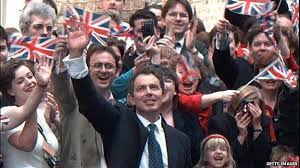
Tony Blair had a clear vision and message in 1997

Instead, many voters were left trying to connect the dots between a series of policy announcements, reversals and compromises. Without a bigger narrative, every decision can begin to feel reactive and rushed.

Every government changes its mind. In fact, I believe good leaders should adapt when circumstances change and not get hung up on Today Programme questioning around U-turns.  However, the issue is not the U-turn itself but the reason and a clear understanding of why it’s happening.

Throughout Starmer’s premiership, several policy reversals created the impression of inconsistency rather than strategic flexibility. Importantly, because there wasn’t an obvious overarching vision, changes in direction often felt disconnected from a bigger plan.  That’s a communications problem as much as it is a political one.

Competent Strong leadership

Strong leadership follows a simple formula: Vision → Strategy → Decisions.

Too often, Starmer appeared to be communicating in reverse: Decision → Explanation → Damage limitation.

When leaders skip the vision, they force audiences to do the hard work themselves and audiences rarely fill in the gaps in your favour.

Competence is no longer enough, whether you are better than the predecessor or competitor, we’ve entered a new era where competence has become the minimum expectation, not the differentiator.

People expect leaders to be capable, they expect them to be organised and they expect them to be prepared but what they’re actually searching for is something else entirely:

  • Direction
  • Clarity
  • Purpose
  • A reason to believe.

Leadership is ultimately a communications exercise. The most effective leaders are often those who can articulate one simple thing:  What future are we building together?

It’s why people remember slogans and narratives long after they’ve forgotten policy details.

‘Take Back Control.’

‘Get Brexit Done.’

‘Make America great again.’

Love them or loathe them, they were memorable because they answered a question and tell people where they were heading. It’s much harder to identify an equivalent phrase that defined Starmer’s Britain.

The lesson for business

Too many organisations make the same mistake. They communicate what they do rather than what they stand for. So often we hear clients suggest messaging that includes:

  • We’re experienced.
  • We’re trusted.
  • We’re innovative.
  • We’re customer-focused.

They are statements, not a story (and pretty obvious statements too as one would expect a business to be trusted and customer focussed!). The businesses that cut through are the ones that answer three simple questions:

  • Why do we exist?
  • Where are we going?
  • Why should anyone come with us?

If you can’t answer those questions in one sentence, you’re asking your audience to do the heavy lifting and that rarely ends well.

Seven Prime Minister in ten years

That statistic alone should concern all of us. It speaks to a wider issue than party politics as it points to a growing frustration with leadership itself. At a time when the world feels increasingly uncertain, people are desperate for consistency.  They are content if it’s not perfection and even better if it’s more than an ideology – but what we want to get behind is a clear direction.

Whether you’re leading a government, a global brand or a small business, people need to know where they’re heading. Because uncertainty is easier to tolerate when there is a destination. Without one, frustration grows quickly.

The takeaway? Leadership is storytelling.

Keir Starmer may ultimately be remembered as a decent, hard-working and fundamentally well-intentioned Prime Minister. But history is often less interested in intentions than it is in impact.

And his greatest challenge wasn’t necessarily policy, it was narrative (and a bit of delivery!). For communications professionals, that may be the biggest lesson of all.  If you don’t define your story, someone else will. And once people stop understanding what you stand for, it’s only a matter of time before they stop standing behind you too.

If you are looking for some strategic communications advice, contact the Source PR team.

https://www.sourcepr.co.uk/wp-content/uploads/2026/06/KS-Worried.jpg 1007 1500 LOUIS HILL http://www.sourcepr.co.uk/wp-content/uploads/2018/04/Header-Logo-2.png LOUIS HILL2026-06-29 10:16:392026-06-29 10:16:39WHAT WENT WRONG FOR KEIR STARMER

PR Trends – From Viral Moments to Cultural Influence

February 10, 2026/in MARKETING, PR/by Jill Mathers

Are You the Consumer Final Boss? What It Tells Us About PR Trends for 2026

If it feels like trends move faster than ever, that’s because they do.

One minute you cannot scroll without seeing Stanley Cups, Dubai chocolate or Labubus. The next, shelves are full, queues are gone and attention has moved on. While these moments might look like product hype on the surface, they reveal something far more important about PR trends heading into 2026.

They show how influence forms, how communities validate trends and how quickly cultural relevance can build — and disappear.

For PR professionals, understanding this cycle is becoming essential.

Because trends today are not just bought. They are believed in.

The Rise Of The ‘Consumer Final Boss’

The consumer final boss is not someone who avoids trends. It is the opposite.

They are the people who buy into everything. First to spot it, first to buy it, first to post it. They do not just follow trends, they help create the pressure that pushes them into the mainstream.

For a long time, I assumed I sat outside of that category. I still have not tried Dubai chocolate, and I have never owned a Labubu. On the surface, that looks like restraint.

But influence is rarely that black and white.

Even without buying into every trend directly, it is impossible not to absorb the signals around what feels relevant. What is everywhere. What other people are validating. What feels culturally “in”. In that sense, even those of us who believe we are being selective are still operating in the same ecosystem as the consumer final boss.

This is exactly why trends move so quickly. PR is not about persuading people to want something they do not care about. It is about amplifying what already feels socially endorsed and understanding how different layers of consumers interact with it.

Why Trends Burn Out So Fast

Most trends do not fail because people suddenly lose interest. They fail because brands misunderstand why people cared in the first place.

Scarcity creates desire. Social proof accelerates it. But when demand is mistaken for longevity, things unravel. Scaling too quickly, overexposing the product or turning a cultural moment into a hard sell often strips away the very thing that made it appealing.

At that point, consumers do what they always do. They move on.

From a PR perspective, this is not a failure of creativity. It is a failure of judgement. Knowing when to lean in is just as important as knowing when to step back.

When A Trend Is Bigger Than What Is Being Sold

One of the smartest examples of recent years did not sell a product at all.

Jet2’s “Nothing beats a Jet2 holiday” became a running joke online, particularly among Gen Z, who took the sound, remixed it and, in many cases, openly mocked it. But instead of shutting it down or over-branding it, Jet2 leaned back.

They allowed the internet to do what it does best.

The result was not a short-lived spike but sustained cultural relevance. The campaign contributed to a reported two per cent rise in profit, taking the business to £715.2 million. Not because Jet2 pushed harder, but because they understood what they owned: a feeling, not a product.

That is PR done well. Owning a narrative, protecting it and knowing when not to interfere.

What This Means For PR In 2026

As we move into 2026, consumer behaviour is becoming more selective, not less. Audiences are quicker to spot inauthenticity, more resistant to over-commercialised trends and increasingly drawn to brands that feel consistent rather than reactive.

This means PR cannot simply chase what is trending. It must interpret it. Decide whether it aligns. Understand how it fits into a wider narrative rather than treating it as a moment to exploit.

The brands that will succeed are not the ones jumping on every cultural wave, but those that understand which conversations are worth joining and which are better left alone.

Where PR adds value

Anyone can follow a trend. Very few can manage one well.

At Source PR, this is where we add value. By helping businesses read cultural signals, understand consumer behaviour and build narratives that last longer than a short attention cycle. PR is not about hype for hype’s sake. It is about relevance, restraint and reputation.

Whether you are trying to create momentum, protect it or sustain it once the noise dies down, understanding how trends really work is essential.

Because influence is not slowing down. Consumers are not becoming less engaged. They are just becoming more discerning.

And knowing how to navigate that is where PR really matters.


https://www.sourcepr.co.uk/wp-content/uploads/2026/02/labubu-matcha-dubai-chocolate-scaled.jpg 1439 2560 Jill Mathers http://www.sourcepr.co.uk/wp-content/uploads/2018/04/Header-Logo-2.png Jill Mathers2026-02-10 10:53:292026-02-10 10:53:29PR Trends – From Viral Moments to Cultural Influence

What’s he going to say next?

February 2, 2026/in Uncategorized/by Seamus O'Keeffe

Why unpredictable communications matter – and what businesses can learn…

In the modern media environment, unpredictability commands attention. Few world leaders have exemplified this more than President Donald J. Trump, whose communications approach – from speeches to impromptu media briefings – has consistently kept audiences asking the same question: “What’s he going to say next?” At Source PR, we believe understanding this phenomenon isn’t merely political commentary: this communications strategy is case study with lessons for B2B leaders and brands alike.

At its core, President Trump’s messaging strategy thrives on uncertainty. Rather than carefully script every soundbite behind closed doors, he often speaks in a conversational, unfiltered manner that leaves audiences – and often even seasoned journalists – unsure what to expect. That unpredictability is far from accidental. In diplomatic negotiations with world leaders, it functions as a strategy rather than a slip-up. When counterparts cannot reliably forecast his next move, traditional negotiation dynamics change – often in Trump’s favour. Other leaders may hesitate, seek clarification, or make concessions to avoid abrupt shifts, effectively allowing the communicator to shape the narrative from a position of advantage.

That same unpredictability plays strongly domestically.

For large segments of the U.S. public, Trump’s tone and cadence feel authentic precisely because they deviate from conventional political script. In an era where generic messaging and polished speech have dominated public discourse, his bold, unscripted style can feel refreshing and direct to supporters – even if it is chaotic to others. This is a crucial insight: audiences value authenticity, and authenticity often stems from risk, not rehearsed messaging.

However, this approach also raises questions about consistency – a cornerstone of effective communication. For companies and leaders in the B2B space, inconsistent messaging can create confusion among stakeholders, erode trust, and slow decision-making. Markets don’t respond well to volatility; partners and clients value messages that are predictable, aligned, and tied to core strategy. When the world is left waiting to decipher the next message, even significant policy announcements – or key commercial updates – risk being drowned out by speculation and noise.

What's he going to say next....?

What’s he going to say next….?

So is Trump’s communications style a model to emulate?

Not in its entirety. What is instructive is the underlying principle: clarity of purpose matters more than rigid consistency of form. In other words, your audience should understand who you are and what you stand for, even if the way you deliver that message varies by channel or moment.

For B2B communicators, the lesson isn’t to foster uncertainty – it’s to harness authenticity and strategic intent within a consistent framework. Whether you’re addressing investors, industry partners, or media, your narrative should be recognisable, repeatable, and aligned to business goals. Unpredictability may generate headlines, but consistency builds credibility.

President Trump’s communications style is a new benchmark in political messaging precisely because it disrupts the old norms – and reminds communicators that how you speak can be as impactful as what you say. For businesses, the invitation is clear: be intentional about your messaging strategy, know your goals, and always be ready to guide your audience toward understanding why you’re speaking – not just what you say next.

https://www.sourcepr.co.uk/wp-content/uploads/2026/02/Screenshot-2026-01-26-at-09.21.17.png 640 490 Seamus O'Keeffe http://www.sourcepr.co.uk/wp-content/uploads/2018/04/Header-Logo-2.png Seamus O'Keeffe2026-02-02 10:00:052026-01-28 14:19:13What’s he going to say next?

Choosing the right influencers for PR campaigns

January 15, 2025/in AGENCY NEWS, CAMPAIGN, CONTENT MARKETING, Uncategorized/by Michela Vismara

Influencers are reshaping the PR and marketing landscape, offering brands unparalleled opportunities to connect with audiences in meaningful ways – but choosing influencers for PR campaigns can be tricky. With great potential comes great responsibility — as seen in the high-profile case of Bud Light and Dylan Mulvaney. This story underscores the importance of choosing the right influencer and navigating the complexities of modern PR. Let’s dive in. 


Case Study: Bud Light & Dylan Mulvaney 

Dylan Mulvaney, a beloved trans influencer, rose to fame through her candid and relatable videos exploring makeup, fashion, dating and everyday life. With over 12 million followers, Mulvaney has worked with top brands like Aritzia, CeraVe, Nike, and Ulta Beauty. 

In 2023, Mulvaney partnered with Anheuser-Busch, makers of Bud Light, Stella Artois, and Corona, as part of a campaign featuring a custom Bud Light can with her face on it. While the campaign was meant to celebrate diversity, it sparked outrage among far-right groups who labelled the company as “too woke.” 

The backlash escalated to boycotts, bomb threats, and falling sales, with Bud Light distancing itself from Mulvaney. Mulvaney, rightly heartbroken by the backlash, responded by calling out Bud Light’s failure to stand by her as: 

“Worse, in my opinion, than not hiring a trans person at all, because it gives customers permission to be as transphobic and hateful as they want.” 

The fallout didn’t stop there. The LGBTQ+ community also began boycotting Bud Light for failing to take a stand, costing the brand its top spot in the U.S. beer market. Meanwhile, Mulvaney ranked 50th on Forbes’ Top Creators list for 2023, earning an estimated £1.6 million ($2 million). 


Lessons Learned 

This cautionary tale highlights how difficult it is for brands to navigate the sociopolitical landscape online, with two key takeaways when working with influencers: 

Alignment is Key

Choose influencers whose values resonate with your audience and brand ethos. A mismatch can lead to alienating your core consumers. 

Stand by Your Choices

If you partner with an influencer, take ownership of the decision. Backing down in the face of backlash can damage your brand’s integrity and alienate both the influencer and their community. 


Influencers for PR campaigns

When done correctly, influencer partnerships can elevate your brand. Here’s how to find the perfect match: 

  1. What Size Influencer Do You Need?

The size of an influencer’s following can greatly impact the reach, cost and engagement of your campaign. Let’s break it down: 


Mega-Influencers for PR campaigns

Examples: Kim Kardashian, KSI, Molly Mae
With millions of followers, mega-influencers are ideal for broad brand awareness. However, their diverse audiences and high costs may not suit every campaign. 


Macro-Influencers for PR campaigns 

Examples: Maura Higgins, Kianaandbeauty, Joplacencio
With 100,000 to 1 million followers, macro-influencers balance reach and relevance. They often specialise in specific areas like beauty, fitness, or gaming, making them a great choice for targeted campaigns. 


Micro-Influencers 

Examples: Afrozuri_, Madisonmiller, Islobodianik 

With 1,000–100,000 follower, micro-influencers are highly engaged with their communities and excel in niche markets. They’re also more budget-friendly, offering excellent ROI for smaller campaigns. 


Nano-Influencers 

Examples: Everyday individuals with under 1,000 followers
These influencers are hyper-local and highly authentic, often influencing close-knit communities. Brands using nano-influencers are perceived as relatable and trustworthy. 


  1. Know Your Audience

Understanding your target audience is crucial. If your goal is broad reach, mega- or macro-influencers may be best. For niche campaigns, micro- or nano-influencers can provide tailored access to specific consumer segments. 


  1. Research, Research, Research

In the age of cancel culture, vetting your influencers is non-negotiable. Ensure they align with your brand’s values and have a clean track record. A misstep here could harm your reputation. 


  1. Evaluate Engagement Rates

Don’t be dazzled by follower counts alone. Assess how actively an influencer engages with their audience: 

  • What’s their average number of likes, comments, and shares? 
  • Have they worked with brands before, and can they provide performance metrics? 
  • Do they deliver measurable ROI? 


  1. Set Clear Expectations

Be upfront about deliverables, timelines, and budgets. Clear communication ensures both parties are aligned, minimising potential misunderstandings. 


  1. Monitor and Measure Performance

Once your campaign is live, track its performance closely. Monitor metrics like engagement rates, website traffic, and conversions. Make sure to adjust your strategy as needed. 


Partnering with influencers can be transformative for your PR campaigns, but it requires careful planning, research, and alignment. As Bud Light’s story demonstrates, the stakes are high — but with the right approach, your brand can build lasting connections and achieve remarkable success.  Contact the Source PR team for any advice.

https://www.sourcepr.co.uk/wp-content/uploads/2025/01/pexels-elevate-1267323-scaled.jpg 1707 2560 Michela Vismara http://www.sourcepr.co.uk/wp-content/uploads/2018/04/Header-Logo-2.png Michela Vismara2025-01-15 11:44:542025-01-16 14:25:57Choosing the right influencers for PR campaigns

Skills You Need To Be A Successful PR In 2023

January 4, 2023/in PR/by SOURCE

It’s no secret that working in public relations and managing successful PR campaigns can be a stressful yet rewarding at times. One day you could be pitching in a hot new client story to the media, the next you could find yourself in Milan conducting a video shoot (okay, that doesn’t happen all that often, but it did for me recently, so I had to mention it!). Working in PR, means you get to add many strings to your bow and here, we explore the essential skills that’ll help you to enjoy a thriving career in PR.


Strong copywriting skills

Possibly the cornerstone of any role in PR and comms is solid copywriting skills. A huge part of the role, you’ll need to turn your hand to writing blogs, white papers, reports, press releases, case studies…the list goes on. If you’re in an agency role with several clients, it’s important to nail the tone of voice for each client and have the ability to digest sometimes complex information before drafting it up in an easily readable and understood manner.


An eye for news

A must-have skill in PR is knowing which story is going to hit the sweet spot with the media. In meetings or interviews, being able to pick out those golden key pieces of information that will leave journalists wanting to know more isn’t a knack that should be taken for granted.


Passion

Passion is what gets us through on the hardest days. Maybe you’re struggling to get in touch with a journalist, your social post isn’t performing how you wanted it to, or your event sign up numbers aren’t as high as anticipated – these things can really put you on a downer after weeks or even months of planning and hard work. A dash of passion and desire to do your best work is what is needed to get us through those tricky days!


A thick skin

Unfortunately, like many industries, delivering successful PR isn’t for the faint hearted. You may come across a cranky  (we all have bad days), challenging crisis comms work, or get some unexpected feedback on an article you poured your heart and soul into and it can be dis-heartening. Feeling this way isn’t a bad thing, it just shows we care!

Adaptability

“But that’s how we’ve always done it” isn’t a welcome phrase in our industry. As professionals, it’s important to be able to adapt, change and embrace new trends, techniques and technology. Gone are the days of cutting out individual press clippings and compiling them into a book to then send in the post to clients – and aren’t we glad of that!? If PRs had ignored this new method of communication called social media 10 years ago, then I wonder where we’d be now. Arguably, SEO only became a thing in the late 90s, and look how much that has evolved over the years. For me, there will always be a place for genuine content and print media, but there’s also plenty of room for the newer stuff too!


The team at Source PR have all of these skills in abundance, to find out how we could help you and your business, get in touch.

https://www.sourcepr.co.uk/wp-content/uploads/2023/01/head-2713346_1280.jpeg 720 1280 SOURCE http://www.sourcepr.co.uk/wp-content/uploads/2018/04/Header-Logo-2.png SOURCE2023-01-04 15:12:002023-01-23 11:52:00Skills You Need To Be A Successful PR In 2023

How Much Do PR Agencies Charge?

August 18, 2022/in PR, SOCIAL MEDIA/by LOUIS HILL

As we head into what is likely to be another economic slowdown, there is often an uplift in businesses wanting to raise their profile in an increasingly competitive market.  With budgets tight and ambitions high, prospective clients often ask us ‘How much do PR agencies charge?’.

The short answer is how long is a piece of string, as there are a number or variables that can influence the amount PR agencies charge, whether it’s the amount of time spent supporting the account, the specialist nature of the work or the seniority and experience of the team required to deliver the results.

But it’s equally an important question as the predetermined budget is one of the key factors when selecting the right PR agency to support your marketing goals.

Here we’ve tried to outline some of the key elements that go into determining a PR budget, to help prospective clients pick the resource and team they need to support their business ambitions.  Knowing the information will hopefully help internal stakeholders understand why the costs are what they are and the agency is the right one for the business

Before appointing a PR agency, the first question must be whether the company has existing skills and resource available to deliver the plans.  If not, there is always the option to recruit a ‘PR manager’ to help, with typical costs of £35 – £50kpa depending on location, experience and skill set.  If selecting this route, ask whether they have all the required skills and industry resources to deliver the campaign as well as what plans are in place to cover holidays or other absences?

Another option could be to use a freelancer.  Freelancers often cost more than an in-house resource and can bring specialisms and experience, but often deliver tactically the strategy that’s been determined in house. Freelancers have specialities and niches, so if considering this you may need to hire one freelancer to handle your social media while another for media relations.  Costs can range from £150- £250 a day again depending on skills and experience and can quickly rack up if not managed carefully.

Selecting the right PR agency

When it comes to selecting a PR or social media agency, these typically fall into three categories, large, small and specialist PR firms.  Hiring an agency gives you access to a team of experts across the full spectrum of communications services from media relations, social media management, crisis communications, public affairs, SEO and more. Unlike a freelancer, agencies usually offer a team to deliver the strategic planning, measurement and evaluation along with tactical delivery and execution.

Smaller or ‘boutique’ agencies, typically have a staff of less than 20. Their monthly fees usually range from £1,500 – £5,000 (potentially more for a London based or highly specialist firm). The value is in the easier access to senior PR counsel as well as the agility and close working relations built with the team. Boutique firms can also specialise in specific sectors and services within the PR and marketing spectrum but offer a more personalised service to client businesses.

Large agencies usually have staff of more than 20 and have offices across the UK or world, offering support to clients that require that reach. Some of the brand names like Edelman, Weber Shandwick and Hill and Knowlton fall under this category. These agencies cost the highest with typical retainers more than £5,000 per month. These agencies are best suited for big corporations and governments, especially those needing PR support for multi-national launches and campaigns.

When it comes down to working out how much do PR agencies charge, most PR and social media agencies operate either on a project or retained basis.  Project rates tend to be for shorter term contracts between one and three months and can be used to support an event or crisis.  Project-based contracts tend to be priced higher than annual retainers because agencies spend a lot of time in winning the business, researching the company and getting to understand the various products or services. The short-term aspect can also put a lot of pressure on the agency’s resources to deliver within the time frame and the time spent on learning the account cannot be recuperated six months down the line once the project has ended.

Retained contracts run longer and are usually around 12 months duration, however at Source PR we are proud to say that we have supported several clients for more than 10 years on a rolling retained basis (as they value the work and results we deliver!). Retained contracts often cost lower than project-based contracts because the time spent and the research done in the initial few months by the agency are paid off in the long-term.

PR Agency Services

Services like media relations are offered on retainer contracts because the best results are achieved in the long term.  A one-off press mention in top-tier media can lead to a short spike in brand awareness or traffic to a website, but only consistent press coverage over the long-term will genuinely build and enhance a company’s brand and reputation.

Retained contracts typically allow clients to pay a fixed rate every month based on a specified scope of work or a fixed number of hours. Some months the work may be slower but it is usually balanced by months when the workload is higher.

One of the key influences into PR agency prices is based around the team allocated to support the business.  PR prices are proportional to the agency day rate card (i.e. how much time a member of the team would be required to support the business and the seniority / experience of the person or team). Naturally the hourly rate of an account executive is lower than that of an account manager, which is lower than that of an account director etc.

When looking to choose a PR agency, it tends to be best to work with a firm whose typical client is of the same size and budget as yours. Some clients with moderate budgets make the mistake of selecting a ‘big name’ agency only to have junior or less experienced PR staff working on the account as the client (or fees!) are not deemed as important to the senior team.  Smaller or boutique agencies typically give better access to the senior team at a more affordable rate.

Finally, one of the other key influences in determining ‘How much do PR agencies charge’ comes down to the services required by the client.  Some services like strategic planning, branding and public affairs understandably cost higher as they require more senior expertise. Crisis communications cost much higher as it requires the PR professional to be available 24X7 to respond to the crisis as it evolves and can take them away from other scheduled work

Similarly, services like media relations or working with influencers – where a PR professional brings their relationships built over the years also cost higher.  Services like social media management or blog writing can cost lower because they can be successfully undertaken without needing years of experience or decades spent building relationships.

The last question to ask is how much would it cost you not to recruit a PR agency?  What is the value of your time, do you have the skills and time to deliver a campaign yourself.  Equally what are the sales and opportunities you’re missing by not building your profile?  All are valid questions when asking ‘how much do PR agencies charge’.

Speak to us

If you’d like to speak to someone about PR pricing and what agencies can deliver against specific budgets, feel free to contact a member of our team.  Source PR is one of the North West’s leading boutique agencies and offers a full range of services to client business across the region and UK.

The team would be delighted to discuss your PR, social media and digital communication requirements and to meet to discuss your ambitions and how best we can deliver against your PR budgets and priorities.

https://www.sourcepr.co.uk/wp-content/uploads/2022/08/How-much-does-a-marketing-agecny-charge.jpeg 630 1200 LOUIS HILL http://www.sourcepr.co.uk/wp-content/uploads/2018/04/Header-Logo-2.png LOUIS HILL2022-08-18 16:05:202022-08-19 11:18:46How Much Do PR Agencies Charge?

My Take On Kim K’s Met Gala PR Stunt

September 17, 2021/in PR/by SOURCE

Written by our PR intern and university student Bridie Buckingham…

The 2021 Met Gala was earlier this week, and it has taken the internet by storm. Like most, I know little about designer brands or high fashion looks, however, that doesn’t stop me from giving my two cents on the red-carpet lineup. Sharing opinions on the best dressed of the night is one of the highlights of the night, especially on social media.

The fashion is extravagant and bold but most importantly it gets people talking (peep Alexandria Ocasio-Cortez’s ‘Tax the Rich’ dress). Visiting Twitter on the evening of the Met Gala is like walking into an explosion of colour, however, this time, it was the absence of colour that really caught my eye.

The theme of this year’s exhibition: In America: A Lexicon of Fashion served many homages to memorable icons, yet of the most surprising looks of the night was brought by none other than Kim Kardashian West.

Dressed in black from head to toe – complete with black face covering, Kim took to the carpet distinguishable only by her signature silhouette. The outfit, designed by Balenciaga’s Demna Gvasalia featured a T-shirt dress over a bodysuit, worn with a balaclava and matching gloves, which left nothing on show apart from Kim’s sleek long ponytail.

Being PRs, we know exactly what this was.

This publicity stunt (because yes, it was a publicity stunt) sparked a fountain of hilarious memes to commemorate the eye-catching look (you’ll find some of my favourites at the end of this blog), whilst others speculated the meaning behind her attire.

Kim Kardashian arriving #MetGala pic.twitter.com/6iNU40vLpf

— RJ (@Dumbledore_BB) September 14, 2021

The stunt could have been to commemorate Kanye’s mother Donda, which is also the name of his recently released album in which Kim participated in the promotions. Kim took to Instagram to ask of her haters “What’s more American than a T-shirt head to toe?!”

This may seem a very flippant answer considering it took me several minutes to even spot the ‘t-shirt’ she was wearing. However, she may be actually very smart to not give the real meaning away, instead of letting people speculate and continue the conversation.

Initially, I couldn’t see past the death eater memes but once I did, I began to realise that this PR stunt was actually a pretty clever message. As I mentioned before, even though she was covered head to toe, her famous silhouette was undeniable. It’s a “fame flex” that bolsters just how strong her brand and influence are in the world. She can change or lose form almost entirely and you would still know it’s her. She steals the spotlight without even trying and in this instance, she doesn’t even need to show skin to get attention. She can wear anything and be recognized by the world.

After a carpet full of overdone outfits, her take was somewhat refreshing. No one has ever done this before, particularly because no one has her fame or the guts to do it. Who else could make this work? She is metaphorically screaming ‘only I can do this, and I own it.’

Love or hate Kim, you can’t deny she gets excellent media coverage!

And, as promised, some more of my favourite memes of the night:

you haven’t unlocked this character yet #MetGala #KimKardashian pic.twitter.com/3MblocNrBW

— elly 🦋 | she/her (@ellymobley) September 14, 2021

if you look closely, you can see kim in donda’s album cover. #MetGala pic.twitter.com/FCtbuqfY06

— Janhavi Krishnan (@janhavisanjayy) September 14, 2021

“hey kendall, its me kim” pic.twitter.com/APUN0CUgr9

— Robertᴺᴹ (@BossBarbieBalla) September 14, 2021

Kim K showing up in my Sims backyard after I took the ladder out of the pool pic.twitter.com/VnWOaTvm3X

— Jamesus ⛪ (@Jimmycoco1) September 14, 2021


Featured image credit: Twitter.

https://www.sourcepr.co.uk/wp-content/uploads/2021/09/E_NMky8XoAQ9cWc.jpeg 433 867 SOURCE http://www.sourcepr.co.uk/wp-content/uploads/2018/04/Header-Logo-2.png SOURCE2021-09-17 10:03:532021-09-17 10:05:49My Take On Kim K’s Met Gala PR Stunt

A Summer Of Sport & PR Disasters

August 10, 2021/in AGENCY NEWS, CAMPAIGN/by LOUIS HILL

It’s been a fantastic summer of sport with the Olympics, Euros and a Lions series in South Africa, let alone all the smaller sporting occasions that take place every week across the country.  All have been achieved despite the global restrictions and regulations in place to tackle the Covid-19 pandemic.

It’s been an amazing feat of organisation and also a welcome opportunity for brands to leverage sponsorships and get their products in front of a pent-up audience looking to spend their cash that’s been accumulated in lockdown.

However, it seems that for many, the promise of PR gold did not quite materialise and in many cases, PR disasters were never far from the surface.

The Coca Cola x UEFA Blunder

Let’s start with Coca Cola multi-million pound sponsorship of the UEFA European Championship.  On one hand, this could have been a fantastic opportunity to promote the brand to a young, vibrant and global audience. However, it ended up being a complete disaster when the tournament’s leading star Cristiano Ronaldo moved two promotional bottles away from the cameras at Portugal’s pre-match press conference, urging viewers to drink water instead.  The action led to Coca Cola’s share price dropping by 1.6 per cent and $4bn being knocked off the company’s share price.  Though rectified in future conferences, the debacle made headlines all over the world, and it’s fair to say that in this instance – the publicity isn’t exactly what Coca Cola were looking for.

Toyota Throws Its Money Down The Drain

When it comes to the Olympics, title sponsor Toyota won gold when it comes to PR disasters after the company decided not to air any of its advertisements that associated the brand with the games, for fear of a backlash by concerned customers who did not want the games to go ahead due to the fear of spreading Covid.

Not only did Toyota pull its adverts, but the sponsor was also banned from the opening ceremony and opted not to attend the games in any way. This all comes despite Toyota becoming the first car company to ever sign up as a worldwide Olympic sponsor in 2015 in, an eight-year deal reportedly worth nearly $1bn.

Toyota Chief Communications Officer Jun Nagata said: “There are many issues with these Games that are proving difficult to be understood.”  It seems a bit late in the day for such comments.

Vodafone Falls Short Of Positive PR

Finally, as a rugby fan, I should also mention the Lions rugby series in South Africa.  An occasion that only comes up every 4 years and every 12 years in South Africa.  The on field scraps and poor criticisms of the referees have left a bitter feeling towards the event with many feeling that the occasion is heading towards its sell by date.

Although title sponsor Vodafone did well in engaging with fans at home, for its estimated £6.5m sponsorship fee, the company was unable to capitalise on an event that is typically enjoyed by thousands of travelling fans.  The games had to take place behind closed doors and the opportunities brands had to associate themselves with positive PR projects in the host country were dramatically reduced (despite an 1800% increase in the sponsorship cost they incurred when compared to their initial sponsorship in 1997).

In previous years, we’ve seen support in townships and deprived areas of the country which allowed for the brand to build its image and illustrate its CSR credentials.  This time around, players were sadly required to lock themselves in isolation bubbles in some of the country’s finest hotels.

The Risk & Reward Of Big Brand Sponsorships

So what’s the answer?  For me, there seems a growing disconnect between the cost / benefit to supporting such occasions.  There’s also a growing potential for a PR disaster if a star snubs your product or the public turn against the event that you have spent millions of pounds supporting and associating yourself with.

From a public relations perspective, winning hearts and minds is most important. So, before entering the agreements, consider the ‘what ifs’ and have plans in place to mitigate the issues or crisis communication challenges should they emerge.

The real opportunity comes from leveraging the sponsorship through campaigns and initiatives within the target communities.  Of all the marketing mediums, PR is best placed to build relationships with consumers and to help brands share their values through engaging and meaningful communications.

So for a marketing gold medal, talk to us and let us devise a PR campaign that is effective and engaging – rather than spending thousands on product placement or relatively worthless brand associations.

https://www.sourcepr.co.uk/wp-content/uploads/2021/08/Tokyo-PR.jpg 683 1024 LOUIS HILL http://www.sourcepr.co.uk/wp-content/uploads/2018/04/Header-Logo-2.png LOUIS HILL2021-08-10 09:06:322021-08-10 09:06:32A Summer Of Sport & PR Disasters

Top Tips For Smashing Your ‘Virtual’ PR Placements

June 22, 2021/in PR/by SOURCE

Written by our PR intern and university student Bridie Buckingham…

To say that Covid has impacted our lives in more ways than one would be an understatement. Just one of the (many) groups to be affected by ongoing restrictions is college and university students. Many will have been planning on embarking on placements this summer and last, but due to restrictions, many of these will have been cancelled or moved online. Below, with my experience, I’m going to go over my top tips on smashing your virtual PR placements, which can still give you some top tier industry experience.

Benefits of ‘virtual PR placements’

Placements are important for students because they provide a learning experience that cannot be taught in the classroom. Summer placements or even ‘year in industry’ placements offer students a glance into the real world. What will life be like after graduation? It’s crucial that students get this opportunity to dip their toes into the world of work before their time in education is up, as going into a career without an inkling of what it is like in real life could be a devastating reality check for some.

Not to mention, job hunting without experience is a nightmare!

With that being said, most placements have gone virtual to allow students to get that valuable experience safely during this period. For me, my internship at The Source also moved online for a period. When the Covid-19 restrictions came into play, I was no longer commuting to the office and sitting at my desk surrounded by our team, instead I was working from my bed, the sofa, the floor… Basically any quiet place I could find that day!

I was communicating with the team via email, WhatsApp, and voice notes.

It was an adjustment, to say the least, but after a few weeks of trial and error, I finally got into a rhythm that worked for me. With summer placements on the horizon, I thought now would be a good time to pass on some tips for smashing your virtual PR placements.

Tips For Virtual PR Placements

Designate a workspace

Whilst many of you will have probably been sat at a desk during your virtual PR placements, that can be difficult to do from home unless you have a home office. Even then, that space may be occupied by others living in your house. In this case, set up an area of your house to use as a workspace. Sitting down in this space sends a clear signal to your brain that it’s time to focus. This is really helpful for productivity but it’s also good for creating a good work-life balance, so you’re not working in the same place that you’re spending your free time.

Take the time to go about your normal morning routine

Eat breakfast, take a shower, and get dressed for the day. Designate some work clothes, even if it’s just a loungewear set. Try to avoid remaining in your pyjamas all day, trust me, it only makes you sleepy. If you prefer to do your hair and makeup, then go for it, looking good makes you feel good right?

Make a to-do list

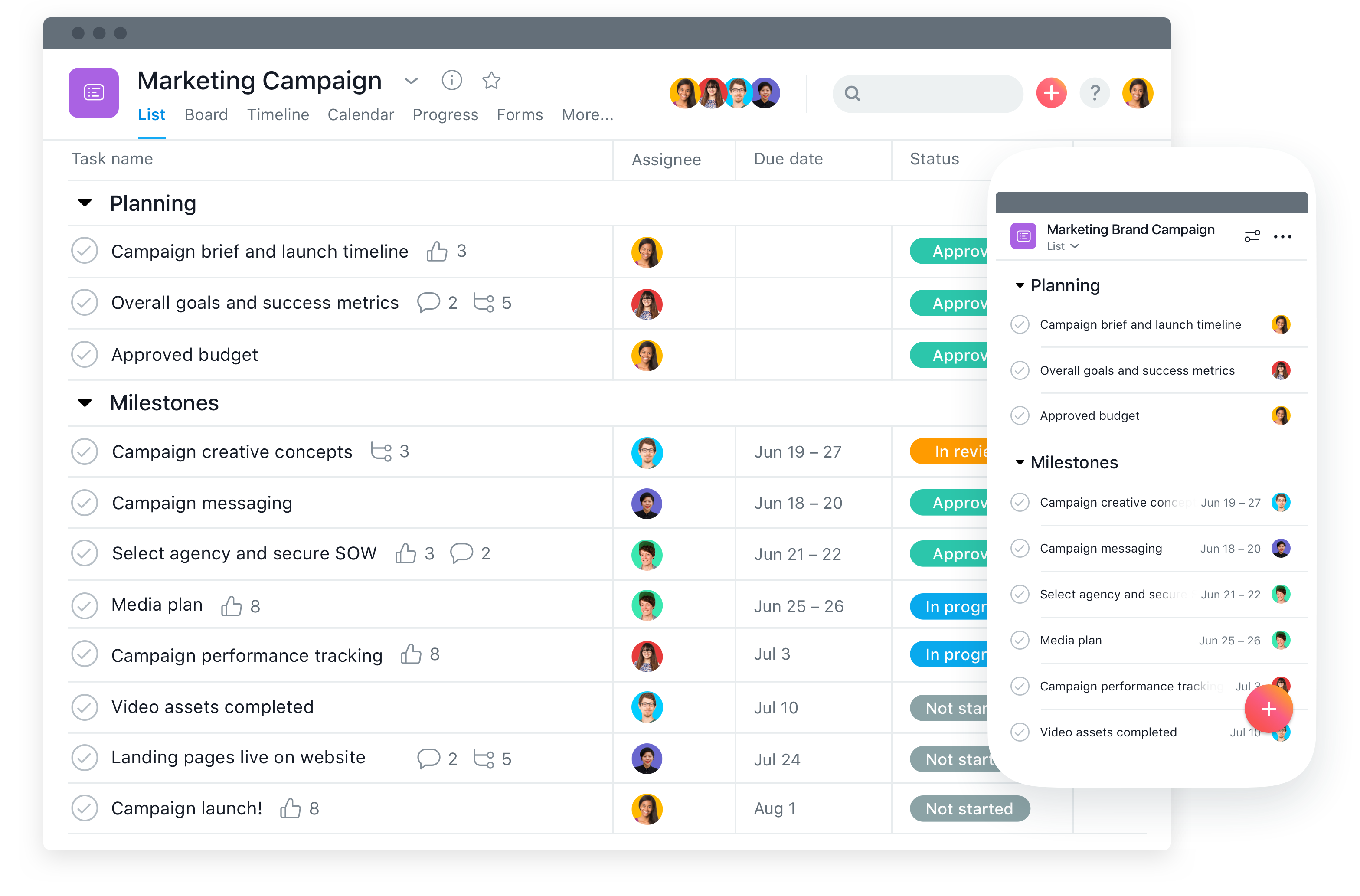
Perhaps one of the most important tips for managing your virtual PR placements! If your emails are piling up with assignments, write them down. Either generate a digital schedule (Asana is a great online organisation tool) or jot it down with pen and paper and stick it in a visible place. If you’re particularly organised, you could even come up with a detailed to-do list that’s broken down into categories based on importance. Regardless, this list will be your best friend as well as your arch-nemesis. After a long day, looking at all the tasks I have completed gives me a little boost whilst also allowing me to schedule the things I didn’t manage to get through today for tomorrow, so they don’t get lost in the next morning’s influx of emails.

asana

This is the Asana project management tool (credit: Asana)

Collaborate with your team

Sharing ideas with each other will improve your projects and you can make new friends in the process. Most companies will set you up with a way of contacting the team, whether it’s via teams, zoom or even WhatsApp so there’s no excuse! At Source, we use Google Hangouts as well as email and of course, picking up the phone, to communicate – but different channels will work for different teams and people.

Communication is key

Remember that. Do not be afraid to ask questions. You are there to learn (and work) and they are there to help. By asking questions you not only gain extra knowledge, but you also gain the skills and information needed to complete the task. Just because you can’t ask questions face to face, doesn’t mean you should put them off. The experience gained from PR work experience is often invaluable when it comes to finding work as a postgraduate, so don’t be afraid to ask anything and everything.

Behave as you would in the office

Last but not least, don’t treat your virtual PR placements any differently than an in-person placement. You should always be timely and productive. Maintain that professional mentality.

Hopefully these tips help someone, and whilst working from home during this time may not be what you planned, you can still make the most of it. Get that experience and put it towards your future. You won’t regret it.

https://www.sourcepr.co.uk/wp-content/uploads/2021/06/pexels-tima-miroshnichenko-4908727-scaled.jpg 1707 2560 SOURCE http://www.sourcepr.co.uk/wp-content/uploads/2018/04/Header-Logo-2.png SOURCE2021-06-22 15:46:172021-07-28 13:46:25Top Tips For Smashing Your ‘Virtual’ PR Placements

Crisis Communications & Why You Should Have Plans In Place

May 21, 2021/in PR, PRESS/by LOUIS HILL

An organisation’s reputation is intrinsically linked with its ability to secure sales, attract top talent or even to charge a premium. Well regarded business also benefit from loyal customers who buy a broader ranges of goods and tell others.  So if reputation is all important why not ensure you have you crisis communication plans in place?

As Benjamin Franklin said; “It takes many good deeds to build a good reputation, and only one bad one to lose it.” Sadly however, most organisations do an inadequate job of managing their reputations, only focussing their energies when a problem has already surfaced.

So what should companies do to protect against reputational damage? The answer depends on the type, complexity and size of the organisation but there are some basic rules of thumb.

Firstly; have a crisis communications plan in place. Organisations should ensure they have the capability and capacity to  respond to negative press, social media or customer complaints. Issues can move quickly but can often be predicted – having a crisis communications plan allow a company to be responsive, co-ordinated and consistent in what it wants to convey, to who and when.

Secondly, be honest.  An organisation that communicates honestly can even build greater trust with its stakeholders in the long term, while one that appears dishonest can undermine confidence and prolong a problem.

Thirdly, get support.  When a crisis hits it can be all consuming.  Customers, suppliers and employees will all need reassurance as well as the media and/or any public authority.  All should be included in the crisis communication plan but business leaders should focus on what they do best and seek professional support to help in other areas.

Identify the members of the crisis communication team and can allocate roles and responsibilities.  This can include simple actions like who should act as spokesperson and whether more than one is needed depending on the enquiry?  Also consider who will field media calls, monitor social media and is there back up required for each role?   The plan should include contact information for all team members including personal mobile phone numbers.

A crisis communications plan shouldn’t predetermine what to say and don’t script the responses – instead focus on developing the key messages you can plan in advance as well as key company information.  Where possible anticipate what the questions may be and how the organisation should respond.  In preparing the responses, consider the who, what, when, why and how and the below offer a useful guide:

  • What was the cause of the crisis?
  • A brief description / understanding of what happened
  • Provide a timetable for future plans and actions
  • Communicate compassion for any victims of the crisis
  • Involve supporters and any emergency service responses

Although many crises can’t be planned in advance, there’s no excuse not to have a plan in place for when one crops up.  The old adage stands true that “if you fail to plan, you plan to fail”, often with devastating consequences to an organisation’s name and all important reputation.

To help develop your crisis communication plan, contact a member of our experienced team and let us support you through the process.

https://www.sourcepr.co.uk/wp-content/uploads/2021/05/Buncefield2.jpg 339 512 LOUIS HILL http://www.sourcepr.co.uk/wp-content/uploads/2018/04/Header-Logo-2.png LOUIS HILL2021-05-21 16:52:122021-07-28 14:00:38Crisis Communications & Why You Should Have Plans In Place
Page 1 of 512345

Latest from Instagram

Follow Us!


CALL US ON 01829 720 789

Scroll to top Scroll to top Scroll to top

This site uses cookies. By continuing to browse the site, you are agreeing to our use of cookies.

OKCookiesPrivacy

Cookie and Privacy Settings


How we use cookies

We may request cookies to be set on your device. We use cookies to let us know when you visit our websites, how you interact with us, to enrich your user experience, and to customize your relationship with our website.

Click on the different category headings to find out more. You can also change some of your preferences. Note that blocking some types of cookies may impact your experience on our websites and the services we are able to offer.

Essential Website Cookies

These cookies are strictly necessary to provide you with services available through our website and to use some of its features.

Because these cookies are strictly necessary to deliver the website, refusing them will have impact how our site functions. You always can block or delete cookies by changing your browser settings and force blocking all cookies on this website. But this will always prompt you to accept/refuse cookies when revisiting our site.

We fully respect if you want to refuse cookies but to avoid asking you again and again kindly allow us to store a cookie for that. You are free to opt out any time or opt in for other cookies to get a better experience. If you refuse cookies we will remove all set cookies in our domain.

We provide you with a list of stored cookies on your computer in our domain so you can check what we stored. Due to security reasons we are not able to show or modify cookies from other domains. You can check these in your browser security settings.

Google Analytics Cookies

These cookies collect information that is used either in aggregate form to help us understand how our website is being used or how effective our marketing campaigns are, or to help us customize our website and application for you in order to enhance your experience.

If you do not want that we track your visit to our site you can disable tracking in your browser here:

Other external services

We also use different external services like Google Webfonts, Google Maps, and external Video providers. Since these providers may collect personal data like your IP address we allow you to block them here. Please be aware that this might heavily reduce the functionality and appearance of our site. Changes will take effect once you reload the page.

Google Webfont Settings:

Google Map Settings:

Google reCaptcha Settings:

Vimeo and Youtube video embeds:

Other cookies

The following cookies are also needed - You can choose if you want to allow them:

Privacy Policy

You can read about our cookies and privacy settings in detail on our Privacy Policy Page.

Privacy Policy
Accept settingsHide notification only