Tag Archive for: communications

Changes to the media and how they can affect us

The media landscape in the UK (and wider world) is undergoing one of the most profound transformations in modern history. Trust is faltering, traditional audiences are shrinking and social platforms are reshaping how news is consumed and importantly who controls it.

For communications professionals, brands and policymakers alike, the question is no longer whether the media has changed, but where it is heading and what this means for reputation, influence and trust.

Reputation and Trust: A Fragile Commodity

Trust in the media has been steadily eroding for over a decade.  According to the Reuters Institute Digital News Report 2024, just 36% of UK respondents say they trust most news most of the time, a significant drop compared to pre-2016 levels when trust was consistently above 45%.  Trust in news accessed via social media is even lower.

This is a fundamental shift as if you no longer trust the media outlets, why are you reading or consuming their outputs?  Does news then shift to entertainment or as the figures show, people simply turn their backs on them and no longer purchase or engage with it?

During COVID-19, media consumption surged but so did a new found level of scepticism. While outlets were relied upon for daily updates, critics argued that government policy and scientific decisions were not always robustly scrutinised in the early stages of the pandemic. That perception, fair or not, contributed to a broader sense that journalism was failing to hold power fully to account – leading to a further erosion of trust.

Once trust declines, it is notoriously difficult to rebuild. Reputation, like credibility, compounds slowly and erodes quickly.

The Decline of Traditional Readership

When trust is lost a negative vortex is created and that is seen in how print and scheduled news broadcast audiences continue to fall sharply.

  • UK national newspaper print circulation has fallen by more than 50% in the past decade.
  • Regional newspaper circulation has declined by over 60% since 2007 (which is even lower than the heydays of the 1990s).
  • Hundreds of local titles have closed, creating “news deserts” across parts of the UK.

On the broadcast side traditional evening bulletins have also seen steady declines:

  • BBC News at Ten has lost roughly half its audience since the early 2000s.
  • ITV News at Ten has experienced similar downward trends.
  • Younger audiences are migrating away from scheduled broadcasts to online social updates

The 16–24 demographic now overwhelmingly consumes news online, often via mobile devices and social platforms.

While digital audiences are larger, they are fragmented and less loyal. Direct website visits are declining as audiences increasingly access news via intermediaries or take their information from AI (which is notoriously unregulated). Historically people would be aware of the ‘agendas’ or biases of the likes of Rupert Murdoch or Robert Maxwell but with AI it seems less so – although according to a YouGov Poll in July 2025 only 14% of consumers trust AI for providing factual information.

It is increasingly evident that consumers have lost trust in external sources of information and news, which means that they are using their own ‘gut feel’ for whether something is true or not, or seeking validation from peers or influencers who share the same views or principles. This can lead to polarisation of society with individuals falling into and seeking endorsements from their own silo views.

The Social Shift: News via the Feed

The Reuters Institute reports that over 50% of UK adults access news via social media each week. Among younger audiences, that number exceeds 70%.

Platforms such as Facebook, X, Instagram, and TikTok have become primary gateways to news. This creates two major shifts; publishers no longer fully control distribution and that individuals and brands can now communicate more directly with audiences.

The ability to bypass traditional gatekeepers is powerful. CEOs, politicians and organisations can speak instantly to millions without editorial mediation. For PR and corporate communications, this has transformed strategy allowing owned channels to rival earned media in influence.

But it also means scrutiny can be avoided and we are seeing an increasing shift towards politicians or CEOs not being made available for comment – simply because they no longer need to and instead choose to appeal directly to their audiences through their own social channels.

This is best illustrated by Donald Trump.  Having been initially kicked off Twitter / X when he had the ability to communicated with 20m+ followers, he set up Truth Social (where he controls what can and can’t be said as well as who gets a platform!).  Aside from the fact a team of unelected executives could effectively silence the ‘most powerful man in the world’ by deleting his account – he is now back online and regularly communicating to his 8.6 million followers on Truth Social and 110m followers on X.

Let’s just stop and reflect on Donald’s ability to speak directly with 110m followers on X.  Alastair Campbell would have loved this ability to ‘control the narrative’ back in the day when he was managing Tony Blair.  No need to worry about dodgy dossiers or the Today Programme challenging the right to attack Iraq – he could simply share his side of the argument with no scrutiny or even ‘fact checking.

This puts politicians and businesses in a powerful position – but sadly there is simply no independent scrutiny over what is being said.

This seems an unfair fight when traditional broadcasters in the UK are regulated by Ofcom and operate under strict impartiality and editorial codes. Newspapers are also subject to industry regulation and defamation law.

Social platforms, by contrast, operate with significantly lighter oversight regarding editorial responsibility where algorithms, not editors, determine visibility.

This regulatory imbalance is reshaping public discourse.

Algorithms, Echo Chambers and Polarisation

Algorithms are designed to maximise engagement. Engagement often means content that provokes emotional reaction.

Research in both the UK and US shows that algorithmic feeds reinforce existing viewpoints, creating echo chambers. Users are shown more of what they already agree with which in turn leads to ideological reinforcement and, over time, polarisation.

The United States provides a cautionary case study. The polarised media ecosystem leading up to and following the Capitol Hill riots illustrated how fragmented information environments can amplify division.

When audiences inhabit entirely different media realities, consensus becomes harder to achieve which again has led to massive polarisation in the US and even talk of civil war as both sides become entrenched and validated through algorithm feeds.

Clickbait and the Dumbing Down of Content

The issue is further compounded as digital economics reward clicks, shares and dwell time. Headlines are increasingly optimised for attention rather than nuance.

Click-driven models encourage sensationalist framing, over simplification of complex issues and largely outrage-based narratives.  This doesn’t necessarily mean journalism standards have collapsed (although it could be argued that they have) but commercial pressures are undeniably shaping presentation. The race for digital advertising revenue is diluting depth and dare I say even creating a fear of annoying advertisers.

I remember the days when I worked at Marks & Spencer in the early 2000s and the company was under constant attack and scrutiny from the media, while also spending tens of thousands advertising in the likes of the Daily Mail.  At one point a telephone call was made to the Mail’s advertising department to ask them to call off the wolves in the editorial team.  The M&S executive was firmly told of the importance of independent editorial and that they would not be threatened with the withdrawal of advertising revenues.  Sadly, the days are long gone when advertising spend did not influence editorial decisions.

The BBC, Legal Challenges and Trust

Even our old Auntie, the BBC, has lost its way and although it is still one of the most trusted news brands in the UK (according to Ofcom research), it is increasingly facing a decline in confidence.

High-profile controversies, including criticism and lawsuits surrounding coverage of the Capitol Hill riots and documentaries on Gaza, contribute to narratives that the broadcaster is either biased or under political pressure.

When trust is questioned, even without proven fault, reputational damage can linger. This in turn leads to an erosion of public confidence which requires sustained transparency and independence for it to recover.

Direct Communication: Opportunity and Risk

So how does the current media landscape affect organisations?  In short, we believe there is an opportunity.  Companies must work on their own direct audience messaging, using the platforms and relationships that they have available to them, principally social media and their websites.

This engagement must be done in real time as consumers now operate in an immediate landscape whether online ordering and delivery through to the availability of news at the opening of a screen.

Organisations should also look to own their own content ecosystems whether providing valuable content regarding their products and services through to wider industry content that will help position them as leading experts who speak with authority.

Let’s also remember the importance of AI and how more than 60% of searches today are ‘no-click’ searches meaning that customers take their information straight from the AI answer.  Companies need to embrace this and have strategies to feed the AI content.

Finally, remember the importance of influencers.  Historically the media has acted as an influencer, but today individuals can have the same reach and power as newspapers and magazines.  These influencers are just that – able to shape the narrative and influence decisions by connectivity and trust with their own audiences.

But it also brings responsibility. Without traditional gatekeepers, misinformation can spread rapidly. Reputation management has shifted from relationship-building with editors to continuous digital monitoring and building coalitions with partners and influencers who can be called on to help when needed.

A Perilous Point

We are arguably at a tipping point where trust in media is declining in parallel with economic pressures on traditional journalism. Audiences are fragmented across algorithm-driven ecosystems and it is evident that regulation has not kept pace with technological change.

This has all led to greater polarisation both of audiences, opinions and news gathering. This poses a danger, not only because ‘independent’ journalism is declining but because of the effect it has on the shared and trusted information space. An independent, powerful and accountable media has always been the foundation of free and democratic societies.

Put most simply – if audiences cannot agree on facts, public discourse becomes unstable, polarisation builds and societal splits happen.

Where does the future lie?

The above may come across as a little fearful, but this is largely because of the speed of change and consumers ability to keep up as well as the role of regulators. We are already seeing legislation being put in place to better manage social media and let’s hope that more scrutiny is put onto ‘fake news’ and people being held more accountable for what is shared online.

There is no doubt however that the media landscape has changed forever.  The future of media will likely be hybrid, based in stronger subscription models which will allow for better journalism.

Although a liberal at heart, let’s also hope for greater regulatory intervention for platforms to not only protect young people but to restore a basic level of trust.  The growth of influencers may also lead to further growth in independent journalism which if executed effectively could help rebuild trust in the medium.

For media organisations, communicators and institutions alike, the challenge is clear – we need to rebuild scrutiny, restore transparency and prioritise accuracy over immediacy. Because once trust is lost, it is extraordinarily hard to regain.

Since the beginning of time and throughout all this recent change one principle remains constant: trust is the currency of influence.  Without trusted media, we risk losing something far more fundamental.

What’s he going to say next?

Why unpredictable communications matter – and what businesses can learn…

In the modern media environment, unpredictability commands attention. Few world leaders have exemplified this more than President Donald J. Trump, whose communications approach – from speeches to impromptu media briefings – has consistently kept audiences asking the same question: “What’s he going to say next?” At Source PR, we believe understanding this phenomenon isn’t merely political commentary: this communications strategy is case study with lessons for B2B leaders and brands alike.

At its core, President Trump’s messaging strategy thrives on uncertainty. Rather than carefully script every soundbite behind closed doors, he often speaks in a conversational, unfiltered manner that leaves audiences – and often even seasoned journalists – unsure what to expect. That unpredictability is far from accidental. In diplomatic negotiations with world leaders, it functions as a strategy rather than a slip-up. When counterparts cannot reliably forecast his next move, traditional negotiation dynamics change – often in Trump’s favour. Other leaders may hesitate, seek clarification, or make concessions to avoid abrupt shifts, effectively allowing the communicator to shape the narrative from a position of advantage.

That same unpredictability plays strongly domestically.

For large segments of the U.S. public, Trump’s tone and cadence feel authentic precisely because they deviate from conventional political script. In an era where generic messaging and polished speech have dominated public discourse, his bold, unscripted style can feel refreshing and direct to supporters – even if it is chaotic to others. This is a crucial insight: audiences value authenticity, and authenticity often stems from risk, not rehearsed messaging.

However, this approach also raises questions about consistency – a cornerstone of effective communication. For companies and leaders in the B2B space, inconsistent messaging can create confusion among stakeholders, erode trust, and slow decision-making. Markets don’t respond well to volatility; partners and clients value messages that are predictable, aligned, and tied to core strategy. When the world is left waiting to decipher the next message, even significant policy announcements – or key commercial updates – risk being drowned out by speculation and noise.

What's he going to say next....?

What’s he going to say next….?

So is Trump’s communications style a model to emulate?

Not in its entirety. What is instructive is the underlying principle: clarity of purpose matters more than rigid consistency of form. In other words, your audience should understand who you are and what you stand for, even if the way you deliver that message varies by channel or moment.

For B2B communicators, the lesson isn’t to foster uncertainty – it’s to harness authenticity and strategic intent within a consistent framework. Whether you’re addressing investors, industry partners, or media, your narrative should be recognisable, repeatable, and aligned to business goals. Unpredictability may generate headlines, but consistency builds credibility.

President Trump’s communications style is a new benchmark in political messaging precisely because it disrupts the old norms – and reminds communicators that how you speak can be as impactful as what you say. For businesses, the invitation is clear: be intentional about your messaging strategy, know your goals, and always be ready to guide your audience toward understanding why you’re speaking – not just what you say next.

Looking ahead to 2026: how PR & Communications can play a pivotal role in growing your business

And why flexible, project-based support from Source PR can make it easier than ever


As we look ahead to 2026, with AI reshaping workflows, media audiences fragmenting, and trust becoming harder to earn, PR has never played a more vital role in helping organisations stand out and scale.

But here’s another reality many businesses face going into 2026: tight budgets, pressure for ROI, and a reluctance to enter long-term retainers.

That’s why at Source PR, we’re increasingly supporting clients through micro-projects – short, focused, results-driven pieces of work designed to give businesses flexibility, value, and impact without lengthy commitments. More on that below.

First, here are the key PR and communications trends that will help to shape 2026 – and how your business can use them to accelerate growth.

  1. AI-enhanced PR: smarter insights, faster decisions

AI continues to evolve rapidly, enabling brands to analyse audience behaviour, predict reputation risks, and spot emerging narratives in real time. It’s giving businesses powerful intelligence that supports better decision-making and sharper strategy.

But AI works best when guided by experienced human judgment – something PR professionals excel at. For businesses looking to build visibility or prepare for growth, this combination of data and expertise is invaluable.

Source PR can help businesses tap into AI-powered insights quickly and affordably, without the need for long-term commitment.

  1. A strong, unified narrative fuels growth

A clear core narrative helps audiences understand what your business stands for – essential for building trust and reputation. In 2026, as digital competition intensifies, scattered messaging simply doesn’t cut through.

PR helps shape a cohesive brand story and ensures it’s expressed consistently across media outreach, digital content, social engagement, and internal communications.

Whether you need a messaging workshop, a refreshed brand story, or a rewrite of key communications pillars, we can deliver high-impact pieces of work that fit your budget and timeline.

  1. Targeted outreach over broad reach

Mass pitching is becoming less effective as newsrooms shrink and audiences fragment. Instead, brands are achieving better results through highly targeted outreach to niche publications, industry podcasts, micro-influencers, specialist newsletters and engaged online communities.

This approach is particularly powerful for B2B businesses, where relevance means more than reach.

Through short-term media outreach and PR projects, Source PR can help you secure meaningful, high-value coverage and campaigns without locking into a long-term retainer.

  1. Hybrid & immersive storytelling creates memorable connections

In 2026, successful brands will be breaking away from traditional comms to create more dynamic experiences, blending digital content with physical events, interactive assets, and thought-leadership activities.

These hybrid storytelling tactics allow businesses to stand out and build deeper connections with customers and stakeholders.

Source PR can support through one-off campaign builds, content creation bursts, or event PR projects, giving you flexible access to creative storytelling when you need it most.

  1. Measurement & ROI matter more than ever

With budgets under pressure, every element of PR must show measurable value. Businesses want clear evidence of how communications drive brand visibility, trust, engagement and commercial outcomes.

Modern PR goes far beyond counting impressions. It analyses sentiment, message clarity, audience quality and long-term impact.

Our micro-project model makes this easier too: each project is designed with defined outcomes and KPIs, giving you complete clarity on what success looks like – without the ongoing cost.

  1. Trust, transparency & authenticity win

With AI-generated noise increasing, trust will become one of the most valuable currencies in 2026. Customers and stakeholders want authenticity, clarity and human connection.

PR plays a crucial role in keeping brands grounded in real, credible storytelling. And with Source PR’s flexible approach, businesses can access expert support exactly when they need it – whether that’s refining a sensitive message, preparing leadership comms, or managing a tricky moment.

Why micro-projects are a game changer for 2026

As businesses prepare for an uncertain economic landscape, flexibility and affordability are essential. That’s why Source PR offers:

✔️ Micro-projects for smaller budgets

Perfect for start-ups, SMEs, or established businesses needing one-off support.

✔️ High-impact work delivered quickly

From media outreach to content creation, strategy sessions to messaging frameworks.

✔️ A low-risk way to test PR

Ideal for businesses exploring PR for the first time or wanting to demonstrate value before scaling up.

In 2026, PR is a growth engine – and it’s now more accessible than ever…

As the communications landscape evolves, PR is becoming a crucial driver of reputation, visibility and commercial growth. And thanks to flexible project-based approaches, businesses no longer need large budgets or long-term contracts to make an impact.

If you want to future-proof your communications and unlock growth in 2026, Source PR is here to help – on your terms, at your pace, and within your budget.

What are the benefits of Community PR

When it comes to shaping your business’s identity, it’s easy to focus on national campaigns or polished digital strategies. But sometimes, the most meaningful connections are forged much closer to home. Community PR isn’t just about sponsoring the occasional event or sending out press releases—it’s about becoming an integral part of the local area and creating relationships that truly resonate with your customers and community.

Why Community PR Is So Powerful

At its heart, community PR is about showing that your business cares. It’s about stepping beyond being “just another company” and becoming a name that’s genuinely woven into the community. Whether you’re supporting a local charity, working with nearby schools, or helping to organise events, these efforts demonstrate a real commitment to the people and places you serve.

The trust you build through consistent, thoughtful contributions pays dividends. In fact, 77% of consumers want to buy from companies they feel are making the world better, and 92% of consumers are more likely to trust a company that embraces CSR. These statistics show the powerful impact community PR can have on your reputation—and your bottom line.

Building Relationships That Work Both Ways

No business exists in isolation. Each one operates within a web of connections—customers, suppliers, and neighbours—all of whom shape its success. Engaging with your local community helps to strengthen these relationships and creates opportunities that benefit everyone involved.

Collaborations are particularly effective. Partnering with local community groups, for example, amplifies your impact and introduces your business to potential customers in a way that feels authentic. Supporting a community sports team, or backing a local event, doesn’t just get your logo in front of people; it shows that your business shares their values.

Word-of-mouth referrals often follow naturally too. There’s something uniquely powerful about a recommendation shared over coffee with a friend or in a neighbourhood group online—it’s genuine and trusted in a way that advertising simply can’t replicate.

Becoming a True Community Contributor

Businesses that stand out are those that actively give back, and not just with cheques or sponsorship banners. The difference comes from rolling up your sleeves and getting involved.

Hosting workshops, lending your space to community groups, or even organising a local seasonal events shows you’re invested in improving the area for everyone – rather than just an exercise in community PR. These actions also humanise your brand, making it feel more like a neighbour and less like a faceless entity.

When people see your business as a contributor to the community’s success, their support becomes personal. And that sense of personal connection is something no marketing budget can buy. And that sense of personal connection is something no marketing budget can buy.

The Wider Benefits

Strong community ties ripple outward in ways you might not expect. Beyond building a loyal customer base, they can also help attract employees who want to work for a company they’re proud of. A business that values its community often draws in people who share that ethos, creating a team that’s invested in more than just profits.

Community engagement also strengthens your relationship with local media. Journalists are far more likely to feature stories about businesses making a positive difference close to home, helping to spread your message even further.

Helping Businesses Make a Real Impact

At Source, we specialise in helping businesses create impactful CSR and community PR strategies. It’s not just about finding the right collaboration—our focus is ensuring it delivers value for both parties.

From identifying ideal community partners to ensuring long-term, mutually beneficial outcomes, we guide businesses in forming genuine connections that align with their goals. Our approach goes beyond surface-level efforts, helping businesses build deeper relationships with the communities that support them—turning sponsorships into meaningful partnerships that reflect shared values and long-term commitment.

Growing Together

Community PR isn’t just an add-on to your marketing strategy—it’s an opportunity to connect and grow in a way that feels authentic and enduring. By taking the time to genuinely invest in the places and people around you, your business becomes more than a brand. It becomes part of the story of a thriving community.

If you’re interested broadening your PR strategies to incorporate meaningful, lasting connections in your community, we’re here to help. With our expert guidance, we’ll help you find the right collaborations and maximise the impact of your community efforts.

Influencer Marketing Lessons From Marcus Rashford

It’s fantastic to hear that the AQA exam board is looking to use Marcus Rashford as a case study on how best to use social media to instigate social change in society.  The 23 year old “black man from Wythenshawe” is not only a role model for many but a brilliant example of what an influencer can really do.

Marcus’ campaign to raise awareness of the issues associated with child poverty is rightfully textbook stuff, illustrating how best to use influence to raise awareness and deliver tangible changes to behaviour.

Within two weeks of launching, more than a million people had signed the petition calling for the government to extend free school meals through the summer holidays of the Covid-19 pandemic.  This was only the 5th time that a petition to parliament raised more than 1m signatures.

His success as an influencer is down to several reasons.  The first is that he has ‘lived experience’ and can relate to the issues he supports.  As a child, it’s well reported that Marcus Rashford had experienced significant poverty and could personally share the role that free school meals had played in his own life.  This meant he was not ‘preachy’ but honest and relatable based on his genuine experiences.

The footballer also has a significant profile on social media with more than 11.8 million followers on Instagram and a further 5 million on Twitter.  His personality shines through his posts and he remains consistently on message, relating to issues and topics that are important to him.  Marcus’ audience also relate to him on several levels whether football, as a young black man or as a role model in delivering social change.

He used his support well and his work was quickly amplified by cafés, takeaways, shops, and other outlets across the country who supported the campaign by pledging free meals to children during the holidays (in defiance of the government’s decision not to).  The campaign quickly built momentum at all levels of society and helped deliver the changes needed.

Marcus Rashford’s influence has been tangible.  He’s not only the youngest person to top the Sunday Times Giving List after raising more than £20 million in donations from supermarkets for groups tackling child poverty, but he’s also actively changed Government policy.

Last summer, Rashford managed to get the government to make a policy U-turn and agree to give free school meals to vulnerable youngsters during the Covid-19 impacted summer.  Later in October he secured a further £170m winter grant to support low-income families struggling with the continued impact of the pandemic.

Although he claims not to have ‘the education of a politician’ it’s clear his messages are simple and, like all good influencing campaigns or PR strategies, designed to engage with his audiences, encourage people to support the cause or even to take matters into their own hands.

This recognition, along with an MBE in the delayed 2020 Queen’s Birthday Honours List, are just some of the accolades he has achieved in his young life.  Let’s hope that Marcus Rashford’s great work continues to shine on the football field and in the fields of positively influencing equality, diversity and inclusion in today’s society.

How Will July 19th’s “Freedom Day” Change The Way We Communicate?

On Monday 19th July, England is expected to enjoy the end of all Covid-19 induced restrictions. This means nightclubs can open, unlimited numbers can meet both indoors and outdoors, bar service at pubs and restaurants will resume and events such as festivals can get underway for the summer. One of the most anticipated and discussed decisions of the years so far, the opinions surrounding July 19th is truly a mixed bag. As PRs for a number of hospitality clients, this change in the rules is huge for us. So, today, we wanted to talk about how the so-called ‘Freedom Day’ next week will change the way we PR.

Using This Opportunity For Comment Placement

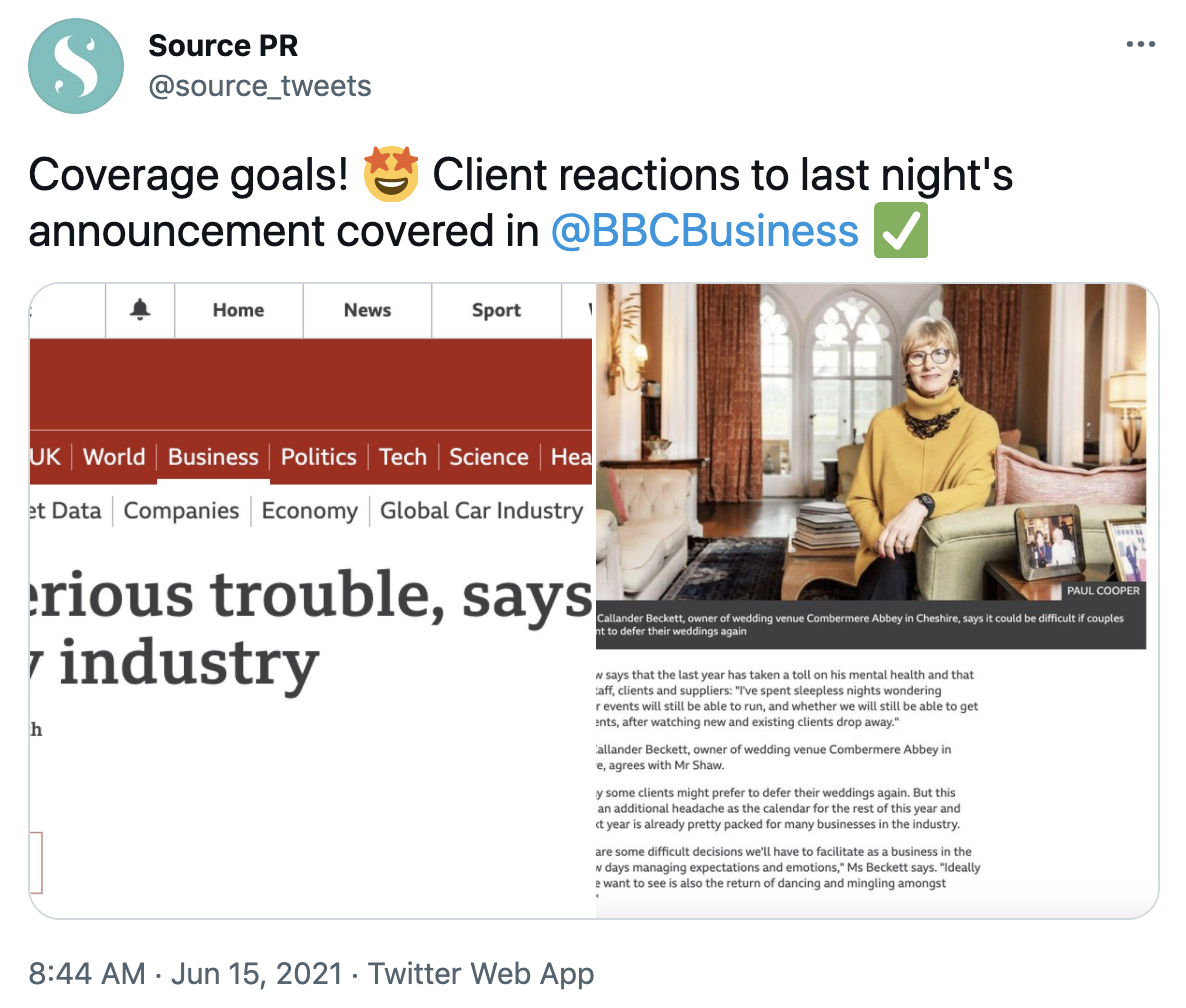
Firstly, July 19th brings about a huge opportunity for businesses, especially those that might have been closed or operating under tight restrictions up until now. We’ll be leveraging these opportunities to get our clients in the press, plenty of journalists will be doing live blogs and frequent articles on ‘Freedom Day’ – how can you join in on the conversation? Only recently, we got one client, the owner of an esteemed wedding venue, in the BBC thanks to being quick-off-the-mark with a reactionary comment to the extended restrictions.

Positive But Mindful Comms

One of the most important things to remember next week, is that although many of us are excited to see the end of restrictions, there are also many who aren’t. Some will still feel hesitant about re-entering normal life and may be still cautious about the virus. Communications should naturally be very positive and enthusiastic, but it might not also be a bad idea to continue communicating about safety restrictions that may be remaining in place for your clients, for those who are more anxious about the situation.

Capturing & Communicating Moments

July 19th is a date that will no doubt go down in the history books, it’s important to capture and communicate special moments from the day. Perhaps you’re a new pub or restaurant having your first ever person at the bar, or maybe a wedding venue hosting your first celebration in 12 months? Whatever it is that’s happening for you or your clients on July 19th, be sure to celebrate it on social and with the media. So many people will be talking about all the various (and hopefully positive) changes to life as we know it, you want to make sure you’re a part of that conversation too.

Ditching The Old Messaging

One of the biggest ways that July 19th will change the way that we ‘PR’, is that most of the messaging from the last year will go out of the window. Though it’s still important to communicate any safety measures where applicable, you’re also going to want to drop most of the Covid-19 messaging from your comms. Many establishments will undergo huge operational changes over the next few weeks, as PRs it’s our job to effectively relay those to audiences and make sure that we’re all on the same page as we enter this next step together.

Embracing Changing Content

Over various periods of lockdowns, home working and ongoing restrictions, the content you would have gotten through from clients would likely have been different. Now that England is opening up again, this is likely to change again. Work with your clients to create the kind of content you wouldn’t have before, whether that’s photography with people enjoying your establishment and your services, or even utilising newfound freedom to create more interesting content such as TikTok videos and Instagram Live updates.

Supporting Others With PR

Finally, one thing we’re planning to consider in our future communications strategies, is that people have suffered throughout the various lockdowns and restrictions, we want to support them with our clients anyway we can. Only recently, with our client Miller Homes, we supported a primary school local to their development who had struggled with fundraising over the past year. This is part of our ongoing CSR activity for our client, and something we’ll consider across the board. Showing you’re helping those out who might’ve been less fortunate than yourselves over the last year, is a great way of reinforcing a positive brand message.

At Source PR, we have a number of clients that will benefit from the July 19th opening, and we’re excited to be supporting them in this next phase. If you’re a business looking to get the most out of the new (or rather, lack of) restrictions, please do get in touch with our friendly team – we’d love to have a chat and get the creative juices flowing.

Crisis Communications & Why You Should Have Plans In Place

An organisation’s reputation is intrinsically linked with its ability to secure sales, attract top talent or even to charge a premium. Well regarded business also benefit from loyal customers who buy a broader ranges of goods and tell others.  So if reputation is all important why not ensure you have you crisis communication plans in place?

As Benjamin Franklin said; “It takes many good deeds to build a good reputation, and only one bad one to lose it.” Sadly however, most organisations do an inadequate job of managing their reputations, only focussing their energies when a problem has already surfaced.

So what should companies do to protect against reputational damage? The answer depends on the type, complexity and size of the organisation but there are some basic rules of thumb.

Firstly; have a crisis communications plan in place. Organisations should ensure they have the capability and capacity to  respond to negative press, social media or customer complaints. Issues can move quickly but can often be predicted – having a crisis communications plan allow a company to be responsive, co-ordinated and consistent in what it wants to convey, to who and when.

Secondly, be honest.  An organisation that communicates honestly can even build greater trust with its stakeholders in the long term, while one that appears dishonest can undermine confidence and prolong a problem.

Thirdly, get support.  When a crisis hits it can be all consuming.  Customers, suppliers and employees will all need reassurance as well as the media and/or any public authority.  All should be included in the crisis communication plan but business leaders should focus on what they do best and seek professional support to help in other areas.

Identify the members of the crisis communication team and can allocate roles and responsibilities.  This can include simple actions like who should act as spokesperson and whether more than one is needed depending on the enquiry?  Also consider who will field media calls, monitor social media and is there back up required for each role?   The plan should include contact information for all team members including personal mobile phone numbers.

A crisis communications plan shouldn’t predetermine what to say and don’t script the responses – instead focus on developing the key messages you can plan in advance as well as key company information.  Where possible anticipate what the questions may be and how the organisation should respond.  In preparing the responses, consider the who, what, when, why and how and the below offer a useful guide:

  • What was the cause of the crisis?
  • A brief description / understanding of what happened
  • Provide a timetable for future plans and actions
  • Communicate compassion for any victims of the crisis
  • Involve supporters and any emergency service responses

Although many crises can’t be planned in advance, there’s no excuse not to have a plan in place for when one crops up.  The old adage stands true that “if you fail to plan, you plan to fail”, often with devastating consequences to an organisation’s name and all important reputation.

To help develop your crisis communication plan, contact a member of our experienced team and let us support you through the process.

Is It Ever Okay To Create Your Own Communications Channel?

With the news that Donald Trump has created his own platform to communicate his messages directly to those who want to read them, we’re asking: is it ever OK to create your own communications channel?


One of the reasons Trump has set up his own ‘social media’ channel is because he has been banned from Twitter, Facebook, Instagram and YouTube – although despite claims from his office of it being a social media channel, I would say it’s actually more of a website/blog.


In PR, we use various tools to get the message out there. One of the main ways is by getting positive coverage for our clients in the media. ‘The media’ ranges from national TV, radio and newspapers through to regional papers and websites to trade magazines and online equivalents. Whichever media is most read by the audience that the client is trying to reach, is the one that works best.


Credibility through media coverage


The thing about getting the media to write about a company is that it’s not the company itself saying how good it is, but a third party. Third party endorsement is much more powerful than taking out an ad in the media, which is like saying yourself how good you are. Who says?! Consumers of that media know that the company has paid for that ad and it comes direct from them.


Readers/viewers/listeners of a news story are receiving it from an independent trusted source not associated with the company the news is about. Much more powerful and credible.


Compelling content writing


But of course, that’s not the only way we get messages out there about our clients. We do get them to communicate directly as well. Whether that be through creative and interesting content on their website, in the shape of blogs for example, or through engaging content on their social media platforms or through newsletters to their subscribers.


By communicating directly, a company has more control over what is written, and of course that’s what Donald Trump wants, especially as he has been so famously vocal in the past about ‘fake news.’


Newsworthy or not?


So is there anything ‘controversial’ in what Trump has done? No not at all, it’s a standard way of a person or an organisation communicating its messages directly to an interested audience. In fact, I would say despite the media attention it got, it’s not even that newsworthy.


But of course, it’s the person behind it, along with his infamy, reputation and social media bans that has got the media’s attention. That and whatever content he might publish on there when he will not be under the constraints of presidency and regulated social media rules. Hardly any new blogs or websites would get this sort of attention, and as a PR agency we would welcome this amount of media attention for our clients!


Our verdict


So yes, we would say it’s definitely OK (and, in fact, a good thing) to communicate directly with your audience as long as the content is relevant and compelling. But do it alongside other activities and get third parties to tell your story as that’s much more powerful. I can tell you how great I am, but if someone else tells you, you’re much more likely to believe it!


To find out how we can help you communicate directly and through the media to your audience, please have a look through our case studies, follow us on social media and get in touch on the phone or through email – 01829 720 789 / janet@sourcepr.co.uk.


Twitter

Facebook

Instagram

LinkedIn

FINDING WORK EXPERIENCE THAT’S RIGHT FOR YOU

Written by our PR intern and university student Bridie Buckingham

Work experience is something we’ve all heard of. Whether at high school or university level, every teacher I’ve ever had has stressed the importance of ascertaining some sort of experience before I graduate.

Being able to detail relevant work experience on your CV will help you stand out when applying for graduate jobs. It’s a real selling point to employers if you can show that you have experience in your field or have been able to hold down a steady job whilst studying.

Any sort of experience is better than none and luckily, there’s an abundance of ways to step on the ladder.

What Kinds Of Work Experience Is There?

Internships

For those wanting to take their first steps into the working world, an internship is a great way to start.

Internships are usually the first port of call when it comes to giving your CV an emphatic boost and can be very helpful in helping you navigate your chosen field. As well as this, internships can also be invaluable in deciding whether your chosen profession really is the career path for you.

Internships are also often very flexible in terms of duration with some lasting only a few days and others a whole year. What is perhaps worth considering is that in all cases, is that it’s best to start early, as the competition can be tough.

Summer/Part-Time Jobs

Perhaps one of the best things about university is the way in which you can introduce yourself to the working world at a leisurely pace.

Internships are not for everyone, however, there is something incredibly rewarding about getting a job to help with finances and experience.

If you don’t wish to commit to an internship, then what about a part time job for work experience?

Hospitality work is obviously the go-to industry in many instances, but anything goes. It all counts as experience and it looks far better on your CV than blank space. You can even squeeze these jobs into the summer holiday if working during semester time is too stressful for you.

Societies

Often overlooked, being part of a society can work wonders for your career prospects and give you some great work experience. It can offer you the opportunity to test your skills of organisation, delegation, events creation, finance management and more importantly, interpersonal relationship building.

You don’t even need to be high up in the ranks.

Simply taking up a role within a society shows a willingness to work together with others. It will hone your ability to work towards a common goal and help you network with others you might not otherwise have the chance to interact with on campus.

Volunteering

A combination of both the easiest and hardest thing to do, volunteering can provide many benefits to a future career (with the added feel-good bonus that comes from helping others).

It can be tricky getting a foot in the door initially – however it is worth the time and effort.

At the same time, volunteering can often be a far more exciting option than a paid placement – sometimes even leading to travel across the globe.

Put simply, volunteering your time can be an incredibly rewarding work experience in terms of personal and professional growth.

However, I know this isn’t for everyone as it wasn’t for me either. With financial situations as they are it can sometimes be hard to justify an unpaid placement over a steady income.

At the end of the day, experience is experience so don’t feel pressured to do the one that ‘looks better’ because any path you take you’ll be one step closer to that dream graduate job.

Whatever you decide, the bottom line is this: all forms of work experience are beneficial. I really valued my work experience, I met some great people and got to experience first-hand just what it was like to work in the PR industry.

In fact, I loved it so much that I decided to stay on and here I am 18 months later.

HOW POETRY CAN BE USED IN COMMUNICATIONS

This article first appeared in Creative Moment and was written by Janet Hare.

Poetry has been around for thousands of years and has given the UK alone heaps of famous and infamous poets such as Chaucer, Keats, Wordsworth, Dylan Thomas, Robbie Burns, Sylvia Plath and many, many more.

Typically though it is known as a niche market, with long-form novels selling far more copies than even the most popular poet. Although Nielsen BookScan did report a 12% increase in poetry book sales in its 2018 report.

Most people see poetry as something they had to learn at school and were pleased to leave behind as they reached adulthood.

And it’s definitely not known as the dominant written form in our lives today. That accolade probably belongs to text speak, alas.

So, if that is the case, then why is poetry being used so much these days in marketing and communications?

Many big UK brands and their ad agencies have taken to using poetry in their broadcast advertising over the last 12 months or so. Nationwide and Co-op are two such companies., as well as EE and OVO.

Starting in 2016, Nationwide ran a series of ads along the theme of ‘voices’ which were designed to highlight the life and diversity of British society. The campaign was brought to life by 31 spoken word poets who lived and worked across the UK. They were given broad themes to work from and wrote original poetry under the subjects such as home, family, friendship.

The campaign apparently helped the building society grow its share of switched accounts to 20%.

It was during that year that I first saw and heard Matt Abbott’s ‘This place is ours’, his poem for Nationwide on what home meant to him. It totally held me captive whilst he talked about his Mum’s roast dinner and dressing gowns being worn all day in his Yorkshire tones. This was real life. This spoke to me.

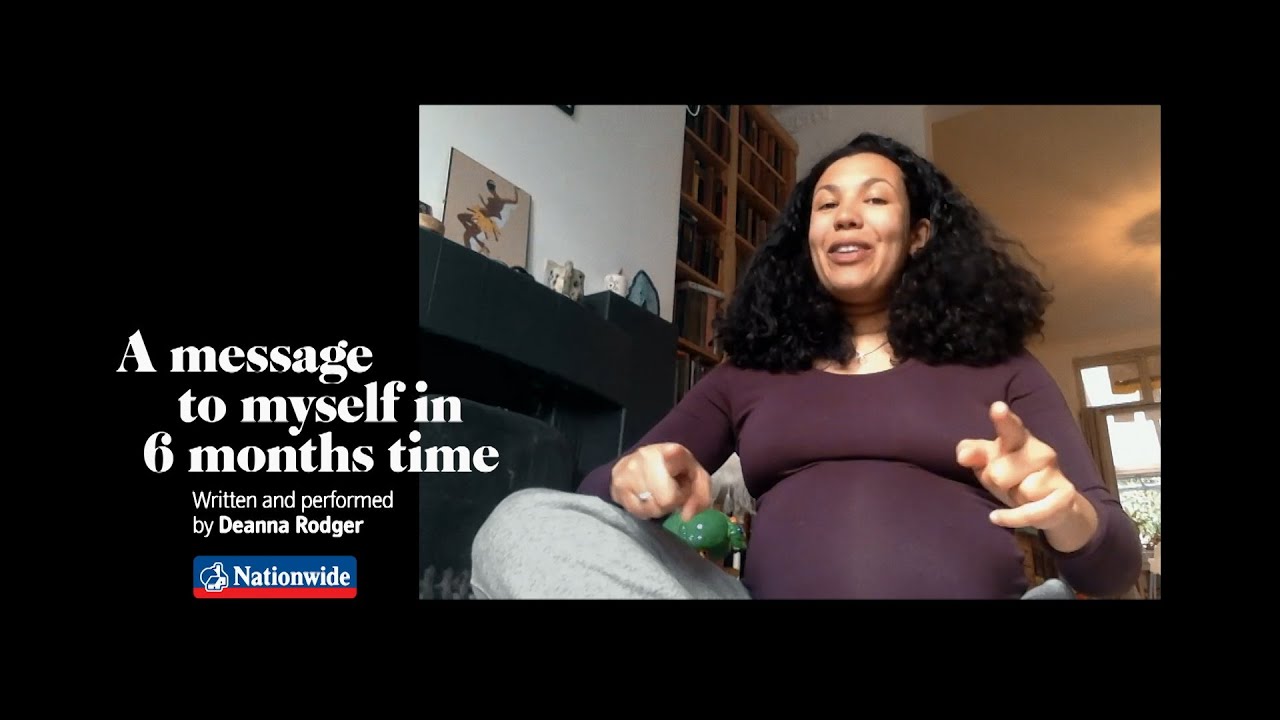
The Voices campaign has been so successful for Nationwide that it’s still running now. In 2020 it even featured poems about the Covid pandemic from the likes of Matt Abbott and his partner Maria Ferguson, titled ‘A message to ourselves/myself in 6 months’ time.’ The Covid-time ads focussed on the theme of how things would be different in the future.

Nationwide The Voices Campaign

Image credit: The Drum

Since then, and particularly in the last 12 months, I have seen numerous other companies take to poems to express themselves in TV ads, such as the Co-op with its ‘Power of hope’ campaign which used a poem based on spoken word artist Sarah Adedeji, ‘All the people giving double’, about people’s struggles and double efforts during Covid. Even Coca-Cola has got in on the act using spoken word artist George the Poet in its TV ad marking the cultural significance of the pandemic.

So why? Why is poetry suddenly being used to communicate messages?

The answer seems simple. Empathy.

Advertisers and communicators recognise that people have turned introspective during the pandemic, spending more time contemplating. Contemplating what is important in life. And spending more time at home has given people more time to be aware of their feelings. They’ve had time to stop and think. Advertisers have recognised this. They have read the room and realised that empathy is where it’s at with good communication right now.

And it’s not only advertisers that have become aware of this. President Biden’s inauguration in the US didn’t just feature pomp and ceremony and politicians giving speeches and elbow bumps. It featured a young, black, female poet, Amanda Gorman delivering ‘The hill we climb’ poem she wrote for the occasion.

In the hours following the ceremony, social media erupted with astonishment at how powerful the poem was and how amazing Amanda, the US youth poet laureate, was in her delivery. The positive media coverage continued the next day and beyond. The impact it made was incredible.

Why did the Biden administration decide to use poetry for this world-stage event? Because they read the room and knew with all the turbulent times the country had seen, what they needed to do now to appeal to the population was show what hadn’t been shown before. Empathy.

I fully expect that Amanda Gorman’s performance will only further propel the use of poetry in communication and as an English Literature grad, that’s something that I look forward to very much.