Tag Archive for: marketing

PR Trends – From Viral Moments to Cultural Influence

Are You the Consumer Final Boss? What It Tells Us About PR Trends for 2026

If it feels like trends move faster than ever, that’s because they do.

One minute you cannot scroll without seeing Stanley Cups, Dubai chocolate or Labubus. The next, shelves are full, queues are gone and attention has moved on. While these moments might look like product hype on the surface, they reveal something far more important about PR trends heading into 2026.

They show how influence forms, how communities validate trends and how quickly cultural relevance can build — and disappear.

For PR professionals, understanding this cycle is becoming essential.

Because trends today are not just bought. They are believed in.

The Rise Of The ‘Consumer Final Boss’

The consumer final boss is not someone who avoids trends. It is the opposite.

They are the people who buy into everything. First to spot it, first to buy it, first to post it. They do not just follow trends, they help create the pressure that pushes them into the mainstream.

For a long time, I assumed I sat outside of that category. I still have not tried Dubai chocolate, and I have never owned a Labubu. On the surface, that looks like restraint.

But influence is rarely that black and white.

Even without buying into every trend directly, it is impossible not to absorb the signals around what feels relevant. What is everywhere. What other people are validating. What feels culturally “in”. In that sense, even those of us who believe we are being selective are still operating in the same ecosystem as the consumer final boss.

This is exactly why trends move so quickly. PR is not about persuading people to want something they do not care about. It is about amplifying what already feels socially endorsed and understanding how different layers of consumers interact with it.

Why Trends Burn Out So Fast

Most trends do not fail because people suddenly lose interest. They fail because brands misunderstand why people cared in the first place.

Scarcity creates desire. Social proof accelerates it. But when demand is mistaken for longevity, things unravel. Scaling too quickly, overexposing the product or turning a cultural moment into a hard sell often strips away the very thing that made it appealing.

At that point, consumers do what they always do. They move on.

From a PR perspective, this is not a failure of creativity. It is a failure of judgement. Knowing when to lean in is just as important as knowing when to step back.

When A Trend Is Bigger Than What Is Being Sold

One of the smartest examples of recent years did not sell a product at all.

Jet2’s “Nothing beats a Jet2 holiday” became a running joke online, particularly among Gen Z, who took the sound, remixed it and, in many cases, openly mocked it. But instead of shutting it down or over-branding it, Jet2 leaned back.

They allowed the internet to do what it does best.

The result was not a short-lived spike but sustained cultural relevance. The campaign contributed to a reported two per cent rise in profit, taking the business to £715.2 million. Not because Jet2 pushed harder, but because they understood what they owned: a feeling, not a product.

That is PR done well. Owning a narrative, protecting it and knowing when not to interfere.

What This Means For PR In 2026

As we move into 2026, consumer behaviour is becoming more selective, not less. Audiences are quicker to spot inauthenticity, more resistant to over-commercialised trends and increasingly drawn to brands that feel consistent rather than reactive.

This means PR cannot simply chase what is trending. It must interpret it. Decide whether it aligns. Understand how it fits into a wider narrative rather than treating it as a moment to exploit.

The brands that will succeed are not the ones jumping on every cultural wave, but those that understand which conversations are worth joining and which are better left alone.

Where PR adds value

Anyone can follow a trend. Very few can manage one well.

At Source PR, this is where we add value. By helping businesses read cultural signals, understand consumer behaviour and build narratives that last longer than a short attention cycle. PR is not about hype for hype’s sake. It is about relevance, restraint and reputation.

Whether you are trying to create momentum, protect it or sustain it once the noise dies down, understanding how trends really work is essential.

Because influence is not slowing down. Consumers are not becoming less engaged. They are just becoming more discerning.

And knowing how to navigate that is where PR really matters.
 

Looking ahead to 2026: how PR & Communications can play a pivotal role in growing your business

And why flexible, project-based support from Source PR can make it easier than ever


As we look ahead to 2026, with AI reshaping workflows, media audiences fragmenting, and trust becoming harder to earn, PR has never played a more vital role in helping organisations stand out and scale.

But here’s another reality many businesses face going into 2026: tight budgets, pressure for ROI, and a reluctance to enter long-term retainers.

That’s why at Source PR, we’re increasingly supporting clients through micro-projects – short, focused, results-driven pieces of work designed to give businesses flexibility, value, and impact without lengthy commitments. More on that below.

First, here are the key PR and communications trends that will help to shape 2026 – and how your business can use them to accelerate growth.

  1. AI-enhanced PR: smarter insights, faster decisions

AI continues to evolve rapidly, enabling brands to analyse audience behaviour, predict reputation risks, and spot emerging narratives in real time. It’s giving businesses powerful intelligence that supports better decision-making and sharper strategy.

But AI works best when guided by experienced human judgment – something PR professionals excel at. For businesses looking to build visibility or prepare for growth, this combination of data and expertise is invaluable.

Source PR can help businesses tap into AI-powered insights quickly and affordably, without the need for long-term commitment.

  1. A strong, unified narrative fuels growth

A clear core narrative helps audiences understand what your business stands for – essential for building trust and reputation. In 2026, as digital competition intensifies, scattered messaging simply doesn’t cut through.

PR helps shape a cohesive brand story and ensures it’s expressed consistently across media outreach, digital content, social engagement, and internal communications.

Whether you need a messaging workshop, a refreshed brand story, or a rewrite of key communications pillars, we can deliver high-impact pieces of work that fit your budget and timeline.

  1. Targeted outreach over broad reach

Mass pitching is becoming less effective as newsrooms shrink and audiences fragment. Instead, brands are achieving better results through highly targeted outreach to niche publications, industry podcasts, micro-influencers, specialist newsletters and engaged online communities.

This approach is particularly powerful for B2B businesses, where relevance means more than reach.

Through short-term media outreach and PR projects, Source PR can help you secure meaningful, high-value coverage and campaigns without locking into a long-term retainer.

  1. Hybrid & immersive storytelling creates memorable connections

In 2026, successful brands will be breaking away from traditional comms to create more dynamic experiences, blending digital content with physical events, interactive assets, and thought-leadership activities.

These hybrid storytelling tactics allow businesses to stand out and build deeper connections with customers and stakeholders.

Source PR can support through one-off campaign builds, content creation bursts, or event PR projects, giving you flexible access to creative storytelling when you need it most.

  1. Measurement & ROI matter more than ever

With budgets under pressure, every element of PR must show measurable value. Businesses want clear evidence of how communications drive brand visibility, trust, engagement and commercial outcomes.

Modern PR goes far beyond counting impressions. It analyses sentiment, message clarity, audience quality and long-term impact.

Our micro-project model makes this easier too: each project is designed with defined outcomes and KPIs, giving you complete clarity on what success looks like – without the ongoing cost.

  1. Trust, transparency & authenticity win

With AI-generated noise increasing, trust will become one of the most valuable currencies in 2026. Customers and stakeholders want authenticity, clarity and human connection.

PR plays a crucial role in keeping brands grounded in real, credible storytelling. And with Source PR’s flexible approach, businesses can access expert support exactly when they need it – whether that’s refining a sensitive message, preparing leadership comms, or managing a tricky moment.

Why micro-projects are a game changer for 2026

As businesses prepare for an uncertain economic landscape, flexibility and affordability are essential. That’s why Source PR offers:

✔️ Micro-projects for smaller budgets

Perfect for start-ups, SMEs, or established businesses needing one-off support.

✔️ High-impact work delivered quickly

From media outreach to content creation, strategy sessions to messaging frameworks.

✔️ A low-risk way to test PR

Ideal for businesses exploring PR for the first time or wanting to demonstrate value before scaling up.

In 2026, PR is a growth engine – and it’s now more accessible than ever…

As the communications landscape evolves, PR is becoming a crucial driver of reputation, visibility and commercial growth. And thanks to flexible project-based approaches, businesses no longer need large budgets or long-term contracts to make an impact.

If you want to future-proof your communications and unlock growth in 2026, Source PR is here to help – on your terms, at your pace, and within your budget.

Insta Threads: Exploring The New Social Media App

In the dynamic realm of social media, the emergence of new platforms always garners attention, intriguing both users and businesses. Among the latest additions this week, ‘Threads’ has been generating buzz. But what is Threads? In this blog, we’ll take a closer look at its origins, and its relevance in the social media landscape. Additionally, we’ll address the pressing question: Do we really need another social media app?

The Birth of Threads

Threads, developed by Facebook, was created as a companion app to Instagram, catering specifically to close friends and intimate circles. Its inception was rooted in the desire to offer users a more private and focused space for sharing content, messages, and updates within a select group of contacts. Threads prioritises real-time communication, enabling users to capture and share the present moment with their inner circle.

Threads Key Features

Reinforcing Privacy – In an era where privacy concerns are paramount, Threads addresses this need by providing users with a secure and intimate platform to connect with their closest friends. With its emphasis on sharing content exclusively with chosen individuals, Threads cultivates an environment of trust and exclusivity.


Real-Time Connection – Threads’ focus on immediate updates facilitates authentic and timely interactions. By encouraging users to share instant updates and statuses, the app fosters a sense of immediacy and facilitates stronger connections between friends.


Targeted Engagement Opportunities – For PR agencies and businesses, Threads offers a unique avenue to engage with a highly involved audience. Leveraging the app’s intimacy, companies can communicate directly with a select group of loyal customers, fostering a stronger sense of community and personalised connection.


Should Your Business Be on Threads?

This question looms large as the social media landscape becomes increasingly saturated. However, Threads brings notable advantages to the table that can benefit PR agencies and businesses.


Niche Audience Targeting – If your PR agency caters to a specific audience or operates within a niche market, Threads presents an opportunity to engage directly with a select group of customers. Leveraging the app’s privacy features, you can foster a sense of exclusivity and build stronger relationships with your most dedicated followers.


Authentic Brand Storytelling – Threads’ emphasis on real-time updates and genuine content sharing aligns well with the focus on authenticity in modern PR. By utilising the app, your agency can showcase the human side of brands, fostering deeper connections and enabling more personal and engaging storytelling.


Relationship Building – PR agencies thrive on building strong relationships with clients and target audiences. Threads allows you to connect with a small, loyal customer base, facilitating meaningful conversations, gathering valuable feedback, and creating a tight-knit community around your clients’ brands.


Remember, adopting a new social media app like Threads should be a strategic decision based on careful evaluation. Ultimately, it’s up to you, your brand, and your PR team to decide if you would like to adopt another social account to connect with your customers. Prioritise aligning with your overall brand strategy, assessing available resources, and understanding the relevance and potential benefits of Threads for your target audience.

Do We Really Need Another Social Media App?

While Threads may present itself as a new social media app, it’s important to recognise that it follows a similar pattern seen in many other platforms. Brands are posting variations of the same content to more or less the same audience across multiple channels. With the interconnected nature of social media, it’s unlikely that newer apps like Threads will exist in isolation from other established platforms. In fact, Threads requires users to link their account to Instagram, indicating a connection and overlap between the two. Consequently, one could argue that by adopting additional social accounts, brands may end up targeting the same audience through different channels. It raises the question of whether the efforts put into maintaining yet another social media app truly bring added value or simply dilute resources and fragment the audience further.


In conclusion, as a PR agency, we understand the importance of staying informed about new developments in the social media landscape, including apps like Threads. While we have examined the potential benefits and considerations surrounding adopting another social media app, it’s important to remember that each brand’s situation is unique. We encourage you to share your thoughts on Threads or any other social media platform with us across our various social media channels.

If you need assistance with your own business’s social campaigns and strategies, we are here to help. Feel free to get in touch with us for expert guidance and support.

How To Best Use Influencer Marketing

Influencer marketing is increasingly being used by businesses and brands to extend their range and reach into new and lucrative markets.  Although the marketing tactic has been used for several years, influencer marketing is set for exponential growth in 2023.

PR agencies have always been the preferred partner for businesses looking to engage in influencer marketing.  From the more traditional media briefings in which companies sought to inspire editors and the media agenda, through to brand collaborations when the reputation of an established brand is used to leverage exposure for a new or emerging brand – the right PR agency can help reach and influence new audiences like no other marketing medium.

Today however influencer marketing primarily refers to collaborations between brands and ‘influencers’ on digital platforms whether social media, blogs or other digital channels. The question often asked by clients is ‘what is an influencer?’ and how to gauge whether they have a genuine ‘influence’ amongst target audiences.

Influencer Marketing – Breaking It Down

One common mistake is to not differentiate between a celebrity and an online influencer. Admittedly many celebrities can extend into the role of influencer but in many cases, they are quite separate entities.

Most influencers have built a loyal and enthusiastic audience by posting relevant and engaging content that resonates with their followers.  People organically elect to follow these influencers based on their content, which in turn can vary from quite generic topics such as food & drink, parenting and travel right down to very specific subjects such as photography, wellness or types of gin (and everything in-between!).

Influencer marketing is not limited to consumer brands as an influencer can be a well-read business expert or blogger who tweets relevant content, or a respected marketing executive on LinkedIn with insightful views and opinions. Within any industry, there are influential people—you just need to find them – and that’s where working with a PR agency can help.

Some influencers have hundreds of thousands (if not millions) of followers but there are also plenty who seem more like ordinary people. They may have less than 10,000 followers but they have developed a reputation for being the experts in their field. They are the go-to people who are trusted to provide the answers to people’s questions. Depending on their sphere of expertise, they can often be the people who make the most engaging social posts on their specialist topics. They share the best pictures, make the most entertaining videos, and run the most informative online discussions.

It’s important to realise that the influencer’s audiences don’t really care about brands specifically, more the opinions of the influencer towards the brand.  It’s therefore important to work with the influencer rather than push your rules, ‘brand guidelines’ or business practices into their actions as they can simply walk away, taking their followers with them or worse still become antagonistic.

The growth of influencer marketing

The statistics speak for themselves.  In 2016, influencer marketing was a $1.7bn industry worldwide, while last year (2022) it had grown to more than $16.4bn.  According to an influencer marketing hub report,  90% of survey respondents believe influencer marketing is an effective form of marketing and currently more than two thirds (67%) of brands use Instagram for influencer marketing.

The growth is set to continue as 75% of the survey respondents suggested that they would be dedicating a budget to influencer marketing in 2023. This rate is up substantially from the 37% who claimed they would allocate a budget to it just 6 years ago in 2017.

Tips for influencer marketing

So, for brands or businesses looking to engage with influencer marketing, we’d suggest that to be most effective, start with a plan that includes objectives, target markets and a budget and then begin careful research into who would be a good fit and provide you with a platform for targeted exposure.

When researching influencers, don’t be overtly swayed by their follower numbers but instead look at their levels of engagement.  How many people like their posts, comment or share as these are the key metrics to consider.  Often big name influencers may not be right for a brand or too commercial to develop genuine and lasting relationships.

Decide also how you are going to find and approach the influencer.  This can be time consuming so working with a PR agency that works with influencers can be a big help as often they may have existing relationship or the resource to target them organically.

When you have found the perfect partner, work with them and develop a schedule of activities.  Consider how their posts can integrate with your existing social media or content marketing schedule, what agreements are in place to ensure the right number of posts, reels or blogs are included in exchange for a product or service.  Is money changing hands and, if so, are the right contracts in place? Also remember the influencer must declare if a financial agreement or if a product has been gifted.

It’s also worth considering what doesn’t work.  Buying influence does not work as many influencers have spent time building their following and so wont risk tarnishing their reputation by selling out and promoting products they don’t like, relate to, or would not recommend to their followers.

It’s also not necessarily about quick results and fast sales.  Although this can be the case (most famously when Delia Smith recommends a kitchen product, they sell out fast!) the main objectives of influencer marketing is building the exposure of your product, its reputation and taking it to new potential audiences through the strength of third party endorsement.

Remember also to be specific as one size does not fit all.  Spend time to find the right fit with an influencer and when that’s achieved it’s proven to pay dividends.

For more information on influencer marketing, contact a member of the Source PR team and let us help build you reputation, product awareness and take your brand or business into new and exciting areas.

‘A Whole New Ball Game’ – Unorthodox PR stunts In The Early Premier League

The new Premier League season begins in just under a month and that prospect whether tantalising or harrowing, depending on your allegiances, means that the big league’s 30th birthday is also just around the corner.

Now in its fourth decade, the Premier League is recognised as the biggest in the world with an audience of 3 billion+ from 188 out of the 193 countries recognised by the UN, tuning in to games over the course of the season.

This is complemented by a slick international marketing campaign that is unique to different territories and highly engaging.

However, 30 years ago, this reality was the stuff of fantasy for Premier League chiefs who were looking to marketing agencies to improve football’s reach, at a time when the sport’s potential had been largely left untapped.

The ‘slum sport’ and the Italia 90 revolution

During the late 1980s, English football was headed into sharp decline.

Stadiums were crumbling, finances were precarious, and attendances were plummeting.

A European ban meant that many of the English game’s biggest stars were seeking pastures new on the continent or north of the border, reducing the quality of First Division football.

Meanwhile, hooliganism was rife, which turned many fans away from football and the violence prompted the Times to brand it as a ‘slum sport’.

However, Italia 90 marked a sea change as all of a sudden through England’s success and the country’s transfixion with the trials and tribulations of the World Cup that year, there was a marketing opportunity.

Jim White of the Telegraph noted that ‘lights [went] on in brains’ of the next generation of media and marketing moguls who spotted the mass appeal of football.

Up until 1992 the Football League had had four divisions, but a breakaway league was proposed by top-flight chairmen that year, as a means of bringing more money into the game and Rupert Murdoch’s BskyB, who saw the earning potential, were willing to bankroll it.

So, with the multi-million pound backing of Sky Television the clubs of the First Division broke away from the century old Football League to form the Premier League.

‘A Whole New Ball Game’

In anticipation for the launch of the Premier League, Sky had assembled a marketing team who had hurriedly set about coming up with a number of PR strategies in the close season, that would attempt to launch the league into the stratosphere.

A number of lessons had been learned from the US about how to market a sport, with takeaways from how merchandising, advertising and entertainment could help brand the league effectively.

Stadiums were kitted out with rolling advertising boards and with extra TV coverage, companies would have to pay more to have their names around the pitch.

Another of the key lessons from the States was to introduce ‘Monday Night Football’, a concept that had enjoyed tremendous popularity across the Atlantic and that was statistically a timeslot which attracted the most women, an important demographic for Sky to reach.

This would bolster interest in the sport from a new audience and the wider branding strategies would increase the awareness of the Premier League.

However, no marketing campaign is complete without a slogan befitting of its seismic nature.

‘A whole new ball game’, was almost exactly what football in the Premier League eventually became, a sport completely alien from its previous down-to-earth but rather unfashionable Football League forerunner.

The phrase almost foresaw the inexorable rise of the league and was particularly important as it used sporting language to show the public that this was a break with the troubled recent past.

This was further emphasised by the accompanying television advert sound-tracked by Simple Minds’ Alive and Kicking which has proved to be equally as iconic.

The unorthodox side of the Premier League’s early marketing

In truth, however, it wasn’t all Simple Minds and clever advertising strategies when it came to marketing an infant Premier League.

No, the early days were marked by trial-and-error PR stunts that, nonetheless, garnered a bewildered sort of interest in what was happening to English football’s top division from the public.

The first ‘Monday Night Football’ match of the new season was between Manchester City and Queens Park Rangers on a sunny August evening.

It provided Sky with the perfect opportunity to showcase their more unorthodox marketing tactics due to the larger anticipated audience share.

As soon as the opening titles abate, however, the chaos unfolds.

The second verse of Alive and Kicking immediately come into earshot, amid a cheerleading routine from the on-brand ‘Sky Strikers’ who would bring American-style pre-match entertainment to Moss Side.

Anchor Richard Keys continued to emphasise the ubiquitous appeal of the new Premier League by declaring it ‘fun for the family’.

The camera then quickly pans away from the cheerleaders to a plane carrying the Sky logo and the ‘whole new ball game’ slogan.

Inside 2 minutes, a whole host of marketing has been packed in but most of it rather unconventional.

By the end of the season, the ‘Sky Strikers’ would be gone after the channel realised that this American-style entertainment didn’t whet the appetite of viewers on this side of the Atlantic and the flyovers would cease.

During the season there would be other unusual PR stunts but none quite as bizarre as the sumo wrestling fight that took place before a night fixture at Leeds’ Elland Road.

Two men carrying giant inflated sumo wrestlers rolled and tumbled towards each other in a pitiful ‘fight’ in the middle of the pitch and were met with a somewhat cool reception from the Yorkshire crowd.

In other instances, groups like The Shamen and Undercover would perform before kick-off or at half time to ensure that the crowd were entertained and back at Maine Road, Frank Sidebottom would appear on the pitch in front of the Manchester City faithful.

Ultimately, though, there was method to the madness.

One of the key marketing figures Jon Smith said, in response to the chaotic entertainment and PR stunts, that his team wanted to ‘do better than a brass band at half time’.

It may have been bizarre at times, but the philosophy of not doing things quietly was born and it would set the tone for the Premier League in years to come.

If you think the team at Source could help you with your PR or media relations, get in touch!

My Take On Kim K’s Met Gala PR Stunt

Written by our PR intern and university student Bridie Buckingham

The 2021 Met Gala was earlier this week, and it has taken the internet by storm. Like most, I know little about designer brands or high fashion looks, however, that doesn’t stop me from giving my two cents on the red-carpet lineup. Sharing opinions on the best dressed of the night is one of the highlights of the night, especially on social media.

The fashion is extravagant and bold but most importantly it gets people talking (peep Alexandria Ocasio-Cortez’s ‘Tax the Rich’ dress). Visiting Twitter on the evening of the Met Gala is like walking into an explosion of colour, however, this time, it was the absence of colour that really caught my eye.

The theme of this year’s exhibition: In America: A Lexicon of Fashion served many homages to memorable icons, yet of the most surprising looks of the night was brought by none other than Kim Kardashian West.

Dressed in black from head to toe – complete with black face covering, Kim took to the carpet distinguishable only by her signature silhouette. The outfit, designed by Balenciaga’s Demna Gvasalia featured a T-shirt dress over a bodysuit, worn with a balaclava and matching gloves, which left nothing on show apart from Kim’s sleek long ponytail.

Being PRs, we know exactly what this was.

This publicity stunt (because yes, it was a publicity stunt) sparked a fountain of hilarious memes to commemorate the eye-catching look (you’ll find some of my favourites at the end of this blog), whilst others speculated the meaning behind her attire.

The stunt could have been to commemorate Kanye’s mother Donda, which is also the name of his recently released album in which Kim participated in the promotions. Kim took to Instagram to ask of her haters “What’s more American than a T-shirt head to toe?!”

This may seem a very flippant answer considering it took me several minutes to even spot the ‘t-shirt’ she was wearing. However, she may be actually very smart to not give the real meaning away, instead of letting people speculate and continue the conversation.

Initially, I couldn’t see past the death eater memes but once I did, I began to realise that this PR stunt was actually a pretty clever message. As I mentioned before, even though she was covered head to toe, her famous silhouette was undeniable. It’s a “fame flex” that bolsters just how strong her brand and influence are in the world. She can change or lose form almost entirely and you would still know it’s her. She steals the spotlight without even trying and in this instance, she doesn’t even need to show skin to get attention. She can wear anything and be recognized by the world.

After a carpet full of overdone outfits, her take was somewhat refreshing. No one has ever done this before, particularly because no one has her fame or the guts to do it. Who else could make this work? She is metaphorically screaming ‘only I can do this, and I own it.’

Love or hate Kim, you can’t deny she gets excellent media coverage!

And, as promised, some more of my favourite memes of the night:


Featured image credit: Twitter.

How We’ve Fallen Out Of Love With Love Island’s Marketing

Much has been made of this year’s Love Island. Since around springtime this year, long-time fans called out their desperation for the seventh season. With this being the first summer series since 2019, combined with a slightly delayed release this year, the anticipation for Love Island could not have been more fervent. Let’s be honest – we were all looking forward to hearing “can I pull you for a chat?”, a heated row or two around the fire pit, and curveball bombshells that come in with the express purpose of tearing apart a new and delicately-formed kinship. After the last eighteen months we’ve had, we craved the escapism of Majorca, a place the majority of us couldn’t make our way to for obvious reasons.


Yet despite the anticipation, this year’s offering seemed to fizzle out almost immediately after its inception. Islanders simply weren’t gelling with one another, playing it safe, or exhaustively professing their love for one type of girl: ‘blonde.’ After an underwhelming finale, in which Liam and Millie were the winners, various claims swarmed the internet that the show had “lost its magic.” Those of us who watched in the early days might be surprised that such a behemoth of television has hit a seven-year itch, but it was perhaps inevitable… Cult shows like Big Brother no longer hold the public’s attention like they did back in the early 2000s.


Under the influence


Unlike Big Brother, which simply became part of Britain’s cultural furniture and therefore was seen as less and less controversial (so, arguably, less compulsive viewing), part of Love Island’s decreasing appeal is the way in which every aspect of the show has become hyper-marketed. From the contestants themselves, to the products they use – everything seems tailored to have the viewer putting something in their online shopping basket by the end of each episode.


That’s not to say brands are unwise to work with Love Island contestants, and influencers in general. Quite the opposite: it’s literally a million-dollar idea. Why not work with ‘normal’ people who have recently had internet fame imposed upon them to promote your product or service? We’re well-versed with helping businesses work with influencers, and the results are almost always fruitful.


Too much of a good thing


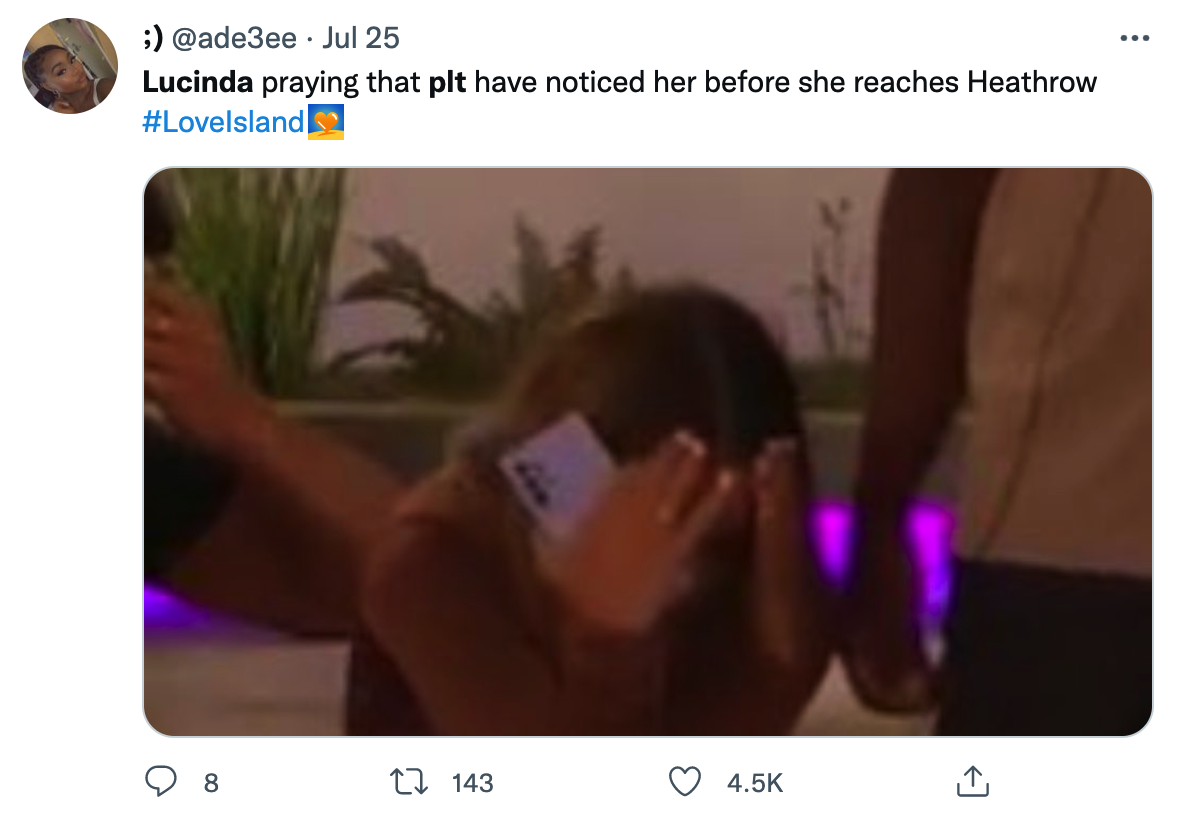
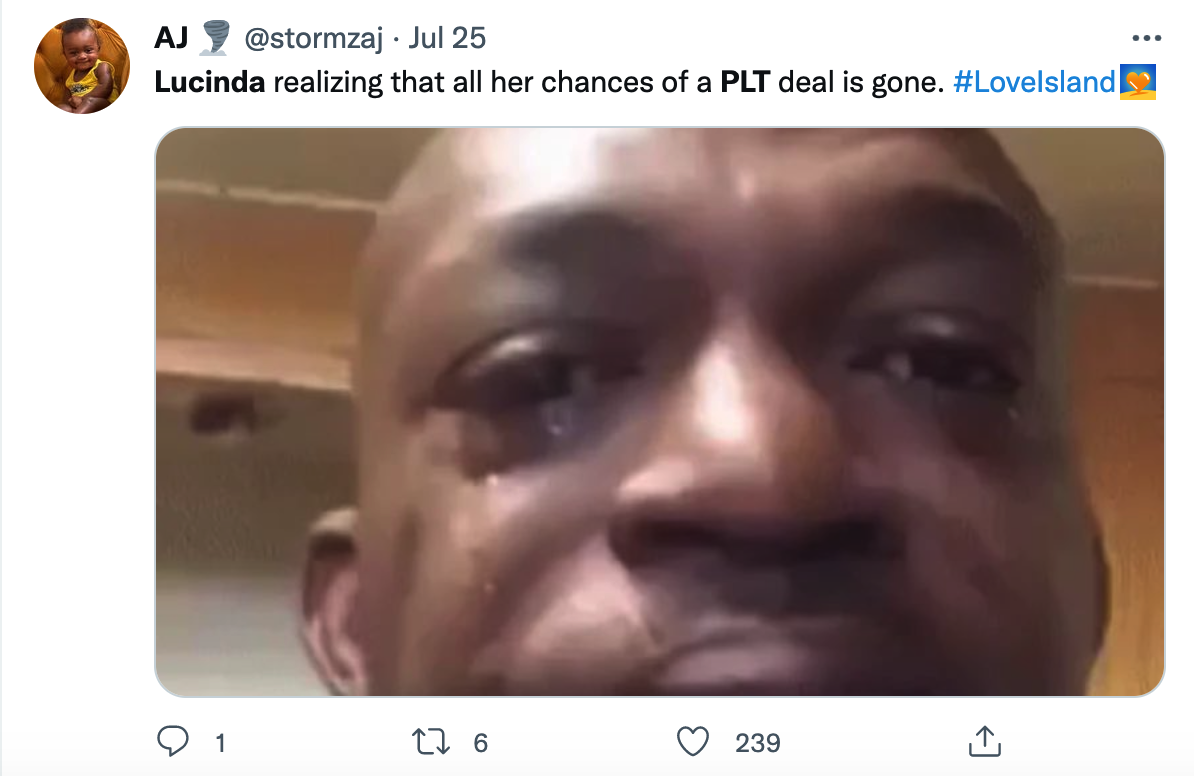
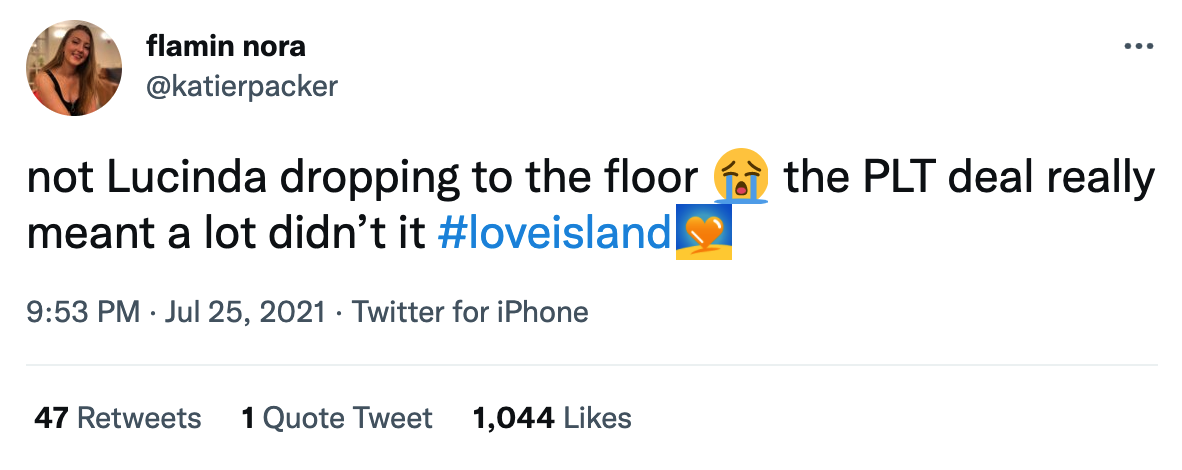
The problem is that it is such a good idea that everyone wants a slice of the pie. We’ve now ended up in a situation where the over-saturation of the Instagram-influencer-slash-fast-fashion-brand-ambassador is having viewers tuning out, turning off and unfollowing. This year’s show saw a dramatic drop in viewers, with Love Island’s initial 6 million viewership per episode having halved by the final weeks – a far cry from its peak in usual seasons, which was around 7 million viewers per episode. Likewise, the largest Instagram followings amassed this year were by Liberty Poole and Millie Court, both at 1.1 million. But these pale into comparison when it comes to Molly Mae Hague, who left 2019’s show with a huge 2.5m followers (however, do remember that she was an influencer and YouTuber prior to appearing on it). Lucinda Strafford, who arrived mid-season, was so transparently in the villa for a fashion brand deal according to Twitter users that a flurry of memes followed her exit from the show.


Lucinda has since snapped up a deal with sister brand I Saw It First after being voted off the show.


Keeping it real


People like authenticity. Typically, the influencers that do the best on the outside world are the ones who do the least brand promotion. Some speculate that part of Molly Mae’s success, for example, is that she doesn’t go down the route of peddling any old product the way that other influencers have been known to such as diet pills and CBD gummies, the scientific effects of which tend to be dubious. TikTokker Manrika Khaira, who appeared on Channel 4’s The Circle earlier this year and who has over 400,000 followers on the platform, works only occasionally with brands, and stresses to her followers that nothing she promotes is something she wouldn’t use herself.


On the flip side of the coin, last year, YouTuber Jack Dean paid former Islanders to promote his fake moisturiser brand, which they needed little encouragement to do, claiming that they’d been using the moisturiser for a long time and explaining all of the supposed benefits. The video has since hit over a million views. Exposés like these that reveal the cracks in the veneer of influencer-dom. Since the inception of Love Island, the British public has been sold a lifestyle of free products, brand partnerships and gifted getaways – it makes complete sense that, seven years down the line, the desire to find love has been eclipsed by the desire for fame and money.


In your face


So how has this affected the public’s perception of the show, other than the decrease in viewership?


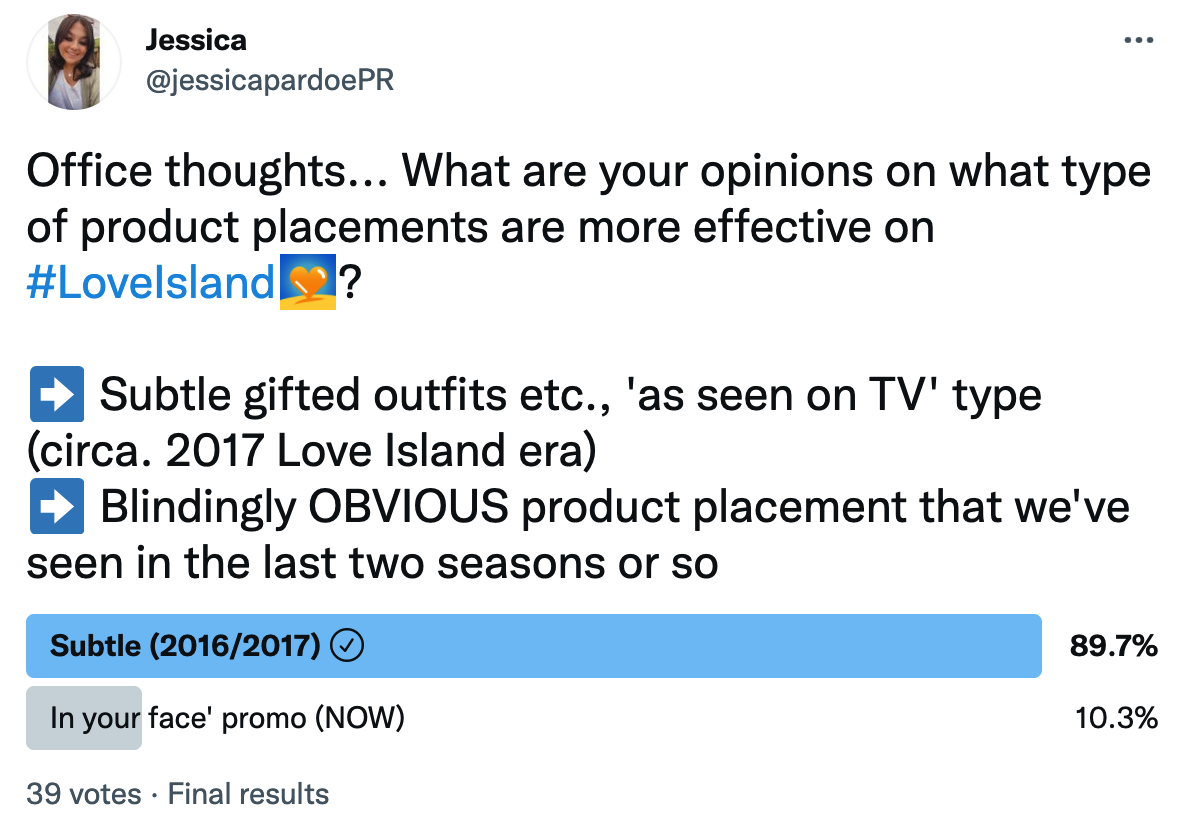
My lovely colleague at Source, Jess, put out a poll on Twitter to her 3,000+ followers to ask them how they felt effectively marketed to by Love Island. Their responses were very clearly in favour of the more subtle marketing of the previous years’ series, as opposed to the much more obvious zoom-ins, strategic placements and sponsorships of the current year.


The fatigue with Love Island, and influencers in general, was always going to happen sooner or later. But brands should think carefully as to whether or not the idea of working with fresh-face influencers has lost its novelty or not – and whether or not viewers find the persistency of their presence in the show annoying enough to avoid their products altogether. At the end of the day, viewers and social media users are far more likely to buy a product when it has come from a reputable source: not simply because someone they saw on television for a few weeks tells them to in a sponsored post. This brings to mind the astonishing statistic that as many as 92% of us buy from brands based on the (honest) opinions of friends of family. As ever, authenticity is key!


At Source, we know a thing or two about working with influencers, bloggers and more, and how it can work best for you and your businesses. Give us a call today on 01829 720789 to talk to one of our experienced team members.


WHY COMMUNITY MATTERS IN YOUR PR STRATEGY

Community relations – sometimes known as CSR (Corporate Social Responsibility) – can be overlooked in the face of immediate, tangible benefits. However, a good PR strategy will consider community and the value of it for your brand. Whether that’s using your platform to champion smaller businesses, or actively supporting charities and organisations.

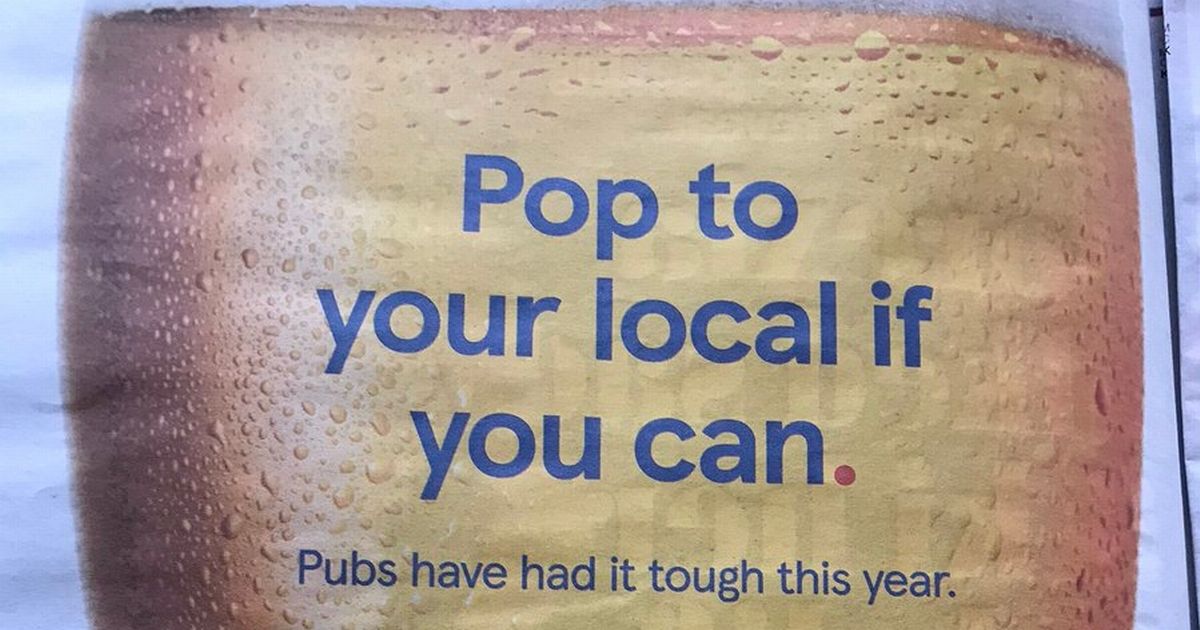
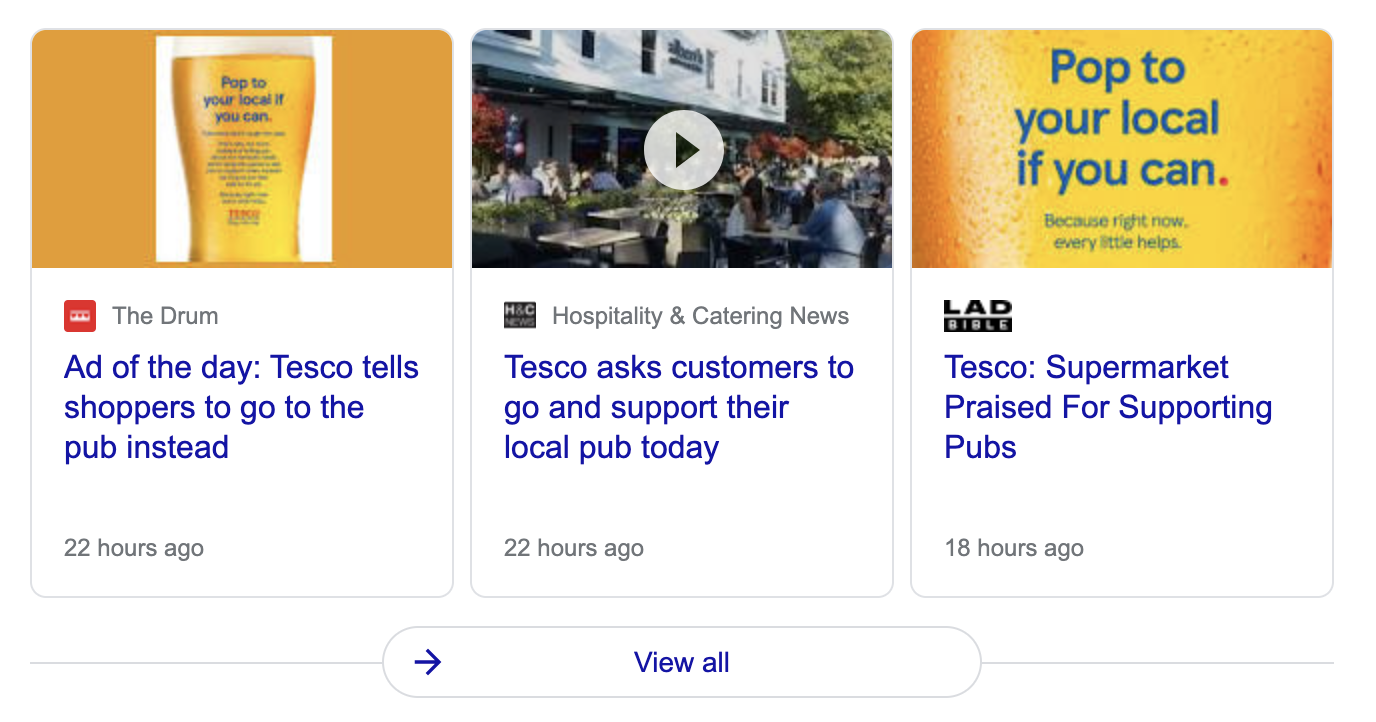
This was proven very recently on April 12th, as pub beer gardens opened across England as part of the Government Roadmap. With the hospitality industry arguably one of the hardest hit amid the Coronavirus pandemic, Tesco decided they would dedicate their advertising space on this monumental day to a better cause. On Monday, they launched the following ad in multiple English newspapers.

Tesco April 12th Print Ad

This kind of media coverage would have been costly, so the idea that Tesco used it to champion smaller, local outlets as opposed to their own business, was very well received. It’s the perfect example as to why community relations matter in any PR strategy. Whether your business is large or small, you cannot go wrong with CSR.

Let’s explore why…

Why You Should Consider The Role Of Community Relations In PR

Community relations are so important to any brand for a multitude of reasons. Some of which include:

  • Building a better brand reputation
  • Making your brand more recognisable in the local area
  • Giving your brand a personality
  • Showing consumers that they’re buying from a brand that cares

For these reasons and many more, is why a whole host of brands work hard on their CSR strategies. Community relations isn’t a black and white area of PR, there are different things that businesses can be doing to improve their image, and it doesn’t matter how big or small your brand is. Some of the things a business can do include:

  • Adopting a sustainability policy
  • Fundraising for charity
  • Donating a portion of sales to charity, such as a % of a sale from a certain product
  • Using a bigger platform to champion smaller businesses
  • Working with local schools and organisations
  • Supporting employees and their own community initiatives
  • Backing smaller sports teams
  • Lobbying for change using your own platforms
  • And so much more (why not ask us what would work best for your brand?)

Why The Tesco Ad Worked

Going back to Tesco and their print advertisement, though it didn’t directly promote their products, it still helped to give the brand a push and generate positive coverage. Tesco’s selfless community relations act ended up returning far more than we can assume a traditional advert would have. Results included more conversation on social media and more positive feelings towards the brand.

Tesco Exaxample Of Community Relations

This links into the age-old debate that PR is not always about ROI and sales. It’s about building a better and more engaging brand. One people recognise as caring and community-driven. This reputation is worth way more than a single newspaper advert. Furthermore, Tesco still got great coverage in the online media as well as from their print ads. Not to mention the fantastic reaction on social media. A traditional advert would never have piqued attention quite like this.

Whilst linking up and supporting your community – whether on a local or national level – might not return immediate sales, it’s a crucial brand-building exercise that any good PR strategy should consider.  At Source PR, we often work with our clients to bring them together with the local area. We often support with this kind of community relations PR work with Miller Homes, one of our clients in the property industry. If you’re interested in finding out more about how this works in a PR strategy, read our case study. Want to know more? Why not reach out to our team?

FINDING WORK EXPERIENCE THAT’S RIGHT FOR YOU

Written by our PR intern and university student Bridie Buckingham

Work experience is something we’ve all heard of. Whether at high school or university level, every teacher I’ve ever had has stressed the importance of ascertaining some sort of experience before I graduate.

Being able to detail relevant work experience on your CV will help you stand out when applying for graduate jobs. It’s a real selling point to employers if you can show that you have experience in your field or have been able to hold down a steady job whilst studying.

Any sort of experience is better than none and luckily, there’s an abundance of ways to step on the ladder.

What Kinds Of Work Experience Is There?

Internships

For those wanting to take their first steps into the working world, an internship is a great way to start.

Internships are usually the first port of call when it comes to giving your CV an emphatic boost and can be very helpful in helping you navigate your chosen field. As well as this, internships can also be invaluable in deciding whether your chosen profession really is the career path for you.

Internships are also often very flexible in terms of duration with some lasting only a few days and others a whole year. What is perhaps worth considering is that in all cases, is that it’s best to start early, as the competition can be tough.

Summer/Part-Time Jobs

Perhaps one of the best things about university is the way in which you can introduce yourself to the working world at a leisurely pace.

Internships are not for everyone, however, there is something incredibly rewarding about getting a job to help with finances and experience.

If you don’t wish to commit to an internship, then what about a part time job for work experience?

Hospitality work is obviously the go-to industry in many instances, but anything goes. It all counts as experience and it looks far better on your CV than blank space. You can even squeeze these jobs into the summer holiday if working during semester time is too stressful for you.

Societies

Often overlooked, being part of a society can work wonders for your career prospects and give you some great work experience. It can offer you the opportunity to test your skills of organisation, delegation, events creation, finance management and more importantly, interpersonal relationship building.

You don’t even need to be high up in the ranks.

Simply taking up a role within a society shows a willingness to work together with others. It will hone your ability to work towards a common goal and help you network with others you might not otherwise have the chance to interact with on campus.

Volunteering

A combination of both the easiest and hardest thing to do, volunteering can provide many benefits to a future career (with the added feel-good bonus that comes from helping others).

It can be tricky getting a foot in the door initially – however it is worth the time and effort.

At the same time, volunteering can often be a far more exciting option than a paid placement – sometimes even leading to travel across the globe.

Put simply, volunteering your time can be an incredibly rewarding work experience in terms of personal and professional growth.

However, I know this isn’t for everyone as it wasn’t for me either. With financial situations as they are it can sometimes be hard to justify an unpaid placement over a steady income.

At the end of the day, experience is experience so don’t feel pressured to do the one that ‘looks better’ because any path you take you’ll be one step closer to that dream graduate job.

Whatever you decide, the bottom line is this: all forms of work experience are beneficial. I really valued my work experience, I met some great people and got to experience first-hand just what it was like to work in the PR industry.

In fact, I loved it so much that I decided to stay on and here I am 18 months later.

WHAT WE’VE LEARNED ABOUT PR FOR HISTORIC HOUSES

Having a rural PR division, we have represented various countryside historic houses over the years, with one of the best examples of our work coming from current client Combermere Abbey, which is a 12th-century abbey based on the Cheshire/Shropshire border. Other examples of venues that we’ve worked with include the Cholmondeley Estate, Adlington Hall and the Wiston Estate in Sussex. Handling PR for historic houses is a tricky aspect of marketing to navigate, as there are often a lot of moving parts as well as many things to learn; but with such a wealth of experience in this field, we’ve learned a thing or two that we’re going to share with you today.

PR For Historic Houses: Our Lessons Learned

There are so many things we’ve learned over the years at The Source from the various clients we’ve worked with, we cover both B2B and B2C industries – as well as having specialities in rural PR and marketing; this means that the team have adept knowledge of the multiple sectors in which we’ve worked. Historic houses PR is one good example, we’ve worked with multiple venues and though each is different, there are universal lessons to be learned from all.

  1. You have to become a total expert

When you work with a historic house, you have to be prepared to learn a LOT. They are called historic houses for a reason – because they have a wealth of history. We put our all into learning everything there is to know about our clients and their backgrounds – no matter how many centuries that may span over. We’d definitely recommend spending time with your client, in person if you can, learning all there is to know. One of the first things you should be doing is taking a guided tour of the venue if that’s an option for you.

  1. Be prepared for unforeseen circumstances

You should have contingency plans in place for all clients, but for historic houses in particular. The Covid-19 pandemic has impacted so many businesses and has not spared the tourism industry. If you’re handling PR for historic houses, there’s a good chance you’ll be promoting tours, open days, overnight stays, perhaps even weddings. All of these had to cease at one point over the last year due to Coronavirus. We’d recommend being well prepared for any eventuality like this and keep an eye on what support there is too. Luckily in 2021, we have had clients who were the recipient of the Culture Recovery Fund, outlined by the Government DCMS and was supported by The National Lottery.

  1. You’ll manage mini sectors all within one business

Most historic houses, especially those that are privately owned, will have multiple strands of their business to generate revenue. For example, open days, tours and overnight stays are commonplace amongst the clients that we have represented. Sometimes even weddings. This means that you’ll be promoting multiple different offerings under one entity, you’ll need to practice specific PR skills, such as travel, local, wedding and more, all of which do differ. The more you’ll work on the accounts, the more you’ll learn and that’s what makes this kind of PR so rewarding.

  1. Get ready to engage with multiple organisations

One of the best things about managing communications for historic houses is that you’ll find there’s a lot of localised support. We work closely with local organisations such as Historic Houses, Marketing Cheshire, VistEngland and Visit Shropshire to further promote our clients to lovers of local attractions and heritage. These groups can be instrumental in your strategy, as you know their audiences are going to be interested in the venues you’re marketing.

  1. You’ll think you know everything… But you never fully will

In our first point, we said that you need to be prepared to become a total expert around the historic houses that you work with, and that’s true, but also expect to never stop learning. When your client has centuries of history, there are always more stones to be overturned, and that’s why we love working with venues like this so much. In PR, they say you never stop learning, and it’s safe to say that we can certainly relate.

  1. There’s so much to love

At Source PR, we become an extension of your team, whether that’s working with marketing, sales or even business owners. We become so passionate about the businesses we work for, and we’ve found that to be our experience when working with historic houses in particular. When you manage PR for historic houses, you learn so much about them, and you play an important part in bringing the magic of them alive for many people. We live and breathe our clients, and we wouldn’t have it any other way.

Support With PR For Historic Houses

If you’re a historic house owner or manager in the UK in need of PR, social media, digital or marketing support, then please do get in touch. We’d love to show you what we can do. You can speak to our team via the contact form on our website, or by calling 01829 720 789. Or you can find out more about our most recent PR work for historic houses by reading the case studies on our site.