Tag Archive for: pr

Looking ahead to 2026: how PR & Communications can play a pivotal role in growing your business

And why flexible, project-based support from Source PR can make it easier than ever


As we look ahead to 2026, with AI reshaping workflows, media audiences fragmenting, and trust becoming harder to earn, PR has never played a more vital role in helping organisations stand out and scale.

But here’s another reality many businesses face going into 2026: tight budgets, pressure for ROI, and a reluctance to enter long-term retainers.

That’s why at Source PR, we’re increasingly supporting clients through micro-projects – short, focused, results-driven pieces of work designed to give businesses flexibility, value, and impact without lengthy commitments. More on that below.

First, here are the key PR and communications trends that will help to shape 2026 – and how your business can use them to accelerate growth.

  1. AI-enhanced PR: smarter insights, faster decisions

AI continues to evolve rapidly, enabling brands to analyse audience behaviour, predict reputation risks, and spot emerging narratives in real time. It’s giving businesses powerful intelligence that supports better decision-making and sharper strategy.

But AI works best when guided by experienced human judgment – something PR professionals excel at. For businesses looking to build visibility or prepare for growth, this combination of data and expertise is invaluable.

Source PR can help businesses tap into AI-powered insights quickly and affordably, without the need for long-term commitment.

  1. A strong, unified narrative fuels growth

A clear core narrative helps audiences understand what your business stands for – essential for building trust and reputation. In 2026, as digital competition intensifies, scattered messaging simply doesn’t cut through.

PR helps shape a cohesive brand story and ensures it’s expressed consistently across media outreach, digital content, social engagement, and internal communications.

Whether you need a messaging workshop, a refreshed brand story, or a rewrite of key communications pillars, we can deliver high-impact pieces of work that fit your budget and timeline.

  1. Targeted outreach over broad reach

Mass pitching is becoming less effective as newsrooms shrink and audiences fragment. Instead, brands are achieving better results through highly targeted outreach to niche publications, industry podcasts, micro-influencers, specialist newsletters and engaged online communities.

This approach is particularly powerful for B2B businesses, where relevance means more than reach.

Through short-term media outreach and PR projects, Source PR can help you secure meaningful, high-value coverage and campaigns without locking into a long-term retainer.

  1. Hybrid & immersive storytelling creates memorable connections

In 2026, successful brands will be breaking away from traditional comms to create more dynamic experiences, blending digital content with physical events, interactive assets, and thought-leadership activities.

These hybrid storytelling tactics allow businesses to stand out and build deeper connections with customers and stakeholders.

Source PR can support through one-off campaign builds, content creation bursts, or event PR projects, giving you flexible access to creative storytelling when you need it most.

  1. Measurement & ROI matter more than ever

With budgets under pressure, every element of PR must show measurable value. Businesses want clear evidence of how communications drive brand visibility, trust, engagement and commercial outcomes.

Modern PR goes far beyond counting impressions. It analyses sentiment, message clarity, audience quality and long-term impact.

Our micro-project model makes this easier too: each project is designed with defined outcomes and KPIs, giving you complete clarity on what success looks like – without the ongoing cost.

  1. Trust, transparency & authenticity win

With AI-generated noise increasing, trust will become one of the most valuable currencies in 2026. Customers and stakeholders want authenticity, clarity and human connection.

PR plays a crucial role in keeping brands grounded in real, credible storytelling. And with Source PR’s flexible approach, businesses can access expert support exactly when they need it – whether that’s refining a sensitive message, preparing leadership comms, or managing a tricky moment.

Why micro-projects are a game changer for 2026

As businesses prepare for an uncertain economic landscape, flexibility and affordability are essential. That’s why Source PR offers:

✔️ Micro-projects for smaller budgets

Perfect for start-ups, SMEs, or established businesses needing one-off support.

✔️ High-impact work delivered quickly

From media outreach to content creation, strategy sessions to messaging frameworks.

✔️ A low-risk way to test PR

Ideal for businesses exploring PR for the first time or wanting to demonstrate value before scaling up.

In 2026, PR is a growth engine – and it’s now more accessible than ever…

As the communications landscape evolves, PR is becoming a crucial driver of reputation, visibility and commercial growth. And thanks to flexible project-based approaches, businesses no longer need large budgets or long-term contracts to make an impact.

If you want to future-proof your communications and unlock growth in 2026, Source PR is here to help – on your terms, at your pace, and within your budget.

The Rise of TikTok SEO And Why PRs Should Care

Google it? Nah. These days, it’s more like ‘TikTok it’.

From recipes and skincare to date night ideas and restaurant reviews, TikTok is fast becoming the go-to search engine for Gen Z. And no, that’s not an exaggeration – data shows that 74% of Gen Z internet users use TikTok for search and 51% favour it over Google.

So, what does this mean for PRs? Basically, if your campaign content isn’t showing up in TikTok searches, you could be completely invisible to one of the most engaged audiences out there.


What’s TikTok SEO?

It’s pretty much what it says on the tin – optimising your content so it can be found on TikTok search. Think hashtags, keywords in captions, on-screen text, trending sounds, and even comment section strategy. The algorithm loves context and interaction – so whether it’s a brand collab or a press story, you need to think search first, scroll second.


Why Is TikTok SEO a Big Deal?

Because TikTok isn’t just where people hang out anymore – it’s where they decide.

Whether it’s “best vegan restaurants in Liverpool” or “quiet coffee shops for studying”, TikTok is now the discovery zone. People aren’t just consuming content passively – they’re actively searching, comparing, bookmarking.

And from a PR standpoint? That’s a golden opportunity to put your brand, client, or message right in front of someone who’s already looking for what you do.


So… What’s TikTok SEO Got To Do With PR?

If we’re honest, most PRs have spent years perfecting the art of the press release. We’ve nailed the “So What?” headlines and the perfect news angle. But we now need to start thinking in terms of scroll speed, sound bites and what people type into TikTok when they want answers.


How Can Businesses Use TikTok Strategically?

If you’re still seeing TikTok as just a lip-syncing app, it might be time to rethink your strategy. Businesses of all sizes are now using TikTok  brand storytelling, customer service, product demos, recruitment – you name it.

Whether you’re a B2B software company or an artisan bakery, here’s where TikTok can fit in:

  1. Be discoverable
    Just like you optimise a press release headline or a blog for search engines, TikTok content needs to be keyword rich. That means knowing your audience, anticipating their search queries, and weaving them naturally into your posts.
  2. Educate and entertain
    Explainer-style content performs incredibly well – think “3 things you didn’t know about…” or “Behind the scenes of…” These kinds of videos not only answer search queries but build trust.
  3. Showcase real people
    Whether it’s your team, your customers, or creators you collaborate with, authentic, face-to-camera content feels more personal – and more persuasive. Don’t worry too much about it being polished. TikTok isn’t Instagram, and that’s kind of the point.
  4. Join the conversation
    React to trends or stitch popular videos with your brand’s take. This is where PR skills really come in – understanding when to jump in on a topic, when to sit it out, and how to position your voice without sounding out of touch.


The Face of TikTok?  It’s Definitely Not a Robot

This isn’t about hacks or gaming the algorithm – it’s still about people, stories, and strategy. TikTok might be driven by AI, but the content that works still relies on understanding how your audience thinks, what they care about, and how they talk.

PRs are natural storytellers, and TikTok SEO is just another way to make sure those stories are actually heard. It’s where media insight meets creative flair – and yes, maybe a trending sound or two.


Not Sure Where to Start?

If it all feels a little too Gen Z, don’t worry – we’re not about turning your brand into a dance challenge.

At Source, our team of skilled professionals are experts in helping businesses step confidently into new platforms. Whether you need help planning your TikTok strategy, refining your messaging, or simply making sense of what this all means for your brand – we’re here to help you take the next step.

Want to find out how we can help your business? Drop us a line here

‘A Whole New Ball Game’ – Unorthodox PR stunts In The Early Premier League

The new Premier League season begins in just under a month and that prospect whether tantalising or harrowing, depending on your allegiances, means that the big league’s 30th birthday is also just around the corner.

Now in its fourth decade, the Premier League is recognised as the biggest in the world with an audience of 3 billion+ from 188 out of the 193 countries recognised by the UN, tuning in to games over the course of the season.

This is complemented by a slick international marketing campaign that is unique to different territories and highly engaging.

However, 30 years ago, this reality was the stuff of fantasy for Premier League chiefs who were looking to marketing agencies to improve football’s reach, at a time when the sport’s potential had been largely left untapped.

The ‘slum sport’ and the Italia 90 revolution

During the late 1980s, English football was headed into sharp decline.

Stadiums were crumbling, finances were precarious, and attendances were plummeting.

A European ban meant that many of the English game’s biggest stars were seeking pastures new on the continent or north of the border, reducing the quality of First Division football.

Meanwhile, hooliganism was rife, which turned many fans away from football and the violence prompted the Times to brand it as a ‘slum sport’.

However, Italia 90 marked a sea change as all of a sudden through England’s success and the country’s transfixion with the trials and tribulations of the World Cup that year, there was a marketing opportunity.

Jim White of the Telegraph noted that ‘lights [went] on in brains’ of the next generation of media and marketing moguls who spotted the mass appeal of football.

Up until 1992 the Football League had had four divisions, but a breakaway league was proposed by top-flight chairmen that year, as a means of bringing more money into the game and Rupert Murdoch’s BskyB, who saw the earning potential, were willing to bankroll it.

So, with the multi-million pound backing of Sky Television the clubs of the First Division broke away from the century old Football League to form the Premier League.

‘A Whole New Ball Game’

In anticipation for the launch of the Premier League, Sky had assembled a marketing team who had hurriedly set about coming up with a number of PR strategies in the close season, that would attempt to launch the league into the stratosphere.

A number of lessons had been learned from the US about how to market a sport, with takeaways from how merchandising, advertising and entertainment could help brand the league effectively.

Stadiums were kitted out with rolling advertising boards and with extra TV coverage, companies would have to pay more to have their names around the pitch.

Another of the key lessons from the States was to introduce ‘Monday Night Football’, a concept that had enjoyed tremendous popularity across the Atlantic and that was statistically a timeslot which attracted the most women, an important demographic for Sky to reach.

This would bolster interest in the sport from a new audience and the wider branding strategies would increase the awareness of the Premier League.

However, no marketing campaign is complete without a slogan befitting of its seismic nature.

‘A whole new ball game’, was almost exactly what football in the Premier League eventually became, a sport completely alien from its previous down-to-earth but rather unfashionable Football League forerunner.

The phrase almost foresaw the inexorable rise of the league and was particularly important as it used sporting language to show the public that this was a break with the troubled recent past.

This was further emphasised by the accompanying television advert sound-tracked by Simple Minds’ Alive and Kicking which has proved to be equally as iconic.

The unorthodox side of the Premier League’s early marketing

In truth, however, it wasn’t all Simple Minds and clever advertising strategies when it came to marketing an infant Premier League.

No, the early days were marked by trial-and-error PR stunts that, nonetheless, garnered a bewildered sort of interest in what was happening to English football’s top division from the public.

The first ‘Monday Night Football’ match of the new season was between Manchester City and Queens Park Rangers on a sunny August evening.

It provided Sky with the perfect opportunity to showcase their more unorthodox marketing tactics due to the larger anticipated audience share.

As soon as the opening titles abate, however, the chaos unfolds.

The second verse of Alive and Kicking immediately come into earshot, amid a cheerleading routine from the on-brand ‘Sky Strikers’ who would bring American-style pre-match entertainment to Moss Side.

Anchor Richard Keys continued to emphasise the ubiquitous appeal of the new Premier League by declaring it ‘fun for the family’.

The camera then quickly pans away from the cheerleaders to a plane carrying the Sky logo and the ‘whole new ball game’ slogan.

Inside 2 minutes, a whole host of marketing has been packed in but most of it rather unconventional.

By the end of the season, the ‘Sky Strikers’ would be gone after the channel realised that this American-style entertainment didn’t whet the appetite of viewers on this side of the Atlantic and the flyovers would cease.

During the season there would be other unusual PR stunts but none quite as bizarre as the sumo wrestling fight that took place before a night fixture at Leeds’ Elland Road.

Two men carrying giant inflated sumo wrestlers rolled and tumbled towards each other in a pitiful ‘fight’ in the middle of the pitch and were met with a somewhat cool reception from the Yorkshire crowd.

In other instances, groups like The Shamen and Undercover would perform before kick-off or at half time to ensure that the crowd were entertained and back at Maine Road, Frank Sidebottom would appear on the pitch in front of the Manchester City faithful.

Ultimately, though, there was method to the madness.

One of the key marketing figures Jon Smith said, in response to the chaotic entertainment and PR stunts, that his team wanted to ‘do better than a brass band at half time’.

It may have been bizarre at times, but the philosophy of not doing things quietly was born and it would set the tone for the Premier League in years to come.

If you think the team at Source could help you with your PR or media relations, get in touch!

Is Love Island To Blame For The Rise And Impending Fall Of Fast Fashion?

Love Island is set to grace our screens for the next six weeks, and for the first time ever, islanders will be wearing pre-loved clothing with eBay as its official partner, ‘dumping’ former fashion sponsor of several years, I Saw It First.

This news came as global fashion giant Missguided announced its administration plans, which led us to question – can a reality dating show be to blame for the rise and subsequent fall of the fast-fashion empire?

Adopting A New Approach

This year, Love Island is adopting a more sustainable approach when it comes to dressing its islanders. The show has teamed up with eBay, alongside vintage stores, and charity shops to showcase what preloved items you can find online. This came as a great surprise at first, especially seeing as previous series of the show have been sponsored by fast fashion brands including Boohoo, Pretty Little Thing and most recently, I Saw It First. Islanders could be seen in the brand’s clothing, which people at home could purchase for as little as £5 (and they did!).

Love Island’s Influence On Buying Habits

Love Island is undoubtedly a pioneer within the fast fashion industry. With an 11% rise in clothing sales observed whilst the show ran last summer, it has a massive influence on what young people buy and where they buy from. On social media, it’s widely known that young people follow the show’s participants and other reality stars, which influences their dress choices. Following their appearances on television, these celebrities frequently remain in the public spotlight, using their platforms to promote fashion businesses. Ex islander Molly-Mae made a name for herself and the brand Pretty Little Thing (PLT) when she became Creative Director of the company in 2022. Her following has risen exponentially since her appearance on the show, which in turn contributes to the millions of sales from her collaboration with PLT.

The fall Of Fast Fashion

More recently, however, the show has been criticised for encouraging fast fashion, coming to a boil when in 2019, Missguided advertised a £1 bikini during an ad break for Love Island, with former contestants modelling the said item of clothing.  This no doubt cemented the link between extreme fast fashion and reality television, which it had been accused of promoting for years. Despite its widely publicised environmental consequences, the industry continues to thrive. Public consciousness has struggled to compete with the low-cost and quick turnaround benefits of mass production.

It’s Cool To Be Sustainable 🌎

Gen Z has long been considered ‘woke’ when it comes to issues that concern the environment today. In a recent study it was seen that this generation is more likely to buy sustainable, high-quality, products. 73% of Generation Z consumers are willing to pay 10% more for sustainable products, in fact! In terms of ‘second hand’ and ‘preloved’ clothing apps we’ve already seen a jump in second-hand clothing sites like Depop and Vinted, buying vintage and thrifted clothing is seen as ‘cool’ amongst young people nowadays. As the islanders grace our screens tonight for the first time this year, will this notion only be cemented as thrifting and re-selling become cemented as ‘trendy’?

Saying Goodbye To Fast Fashion?

Public and viewer buying habits are very much influenced by the people they see on TV, but will we see a decline in sales from fast fashion brands and a rise in second-hand buying?

Of course, only time can tell.

But what we can say, is we hope to see a shift in the fashion industry when it comes to sustainability, many brands like John Lewis and Selfridges have already opted into second-hand shopping services for customers to combat clothing waste. With the new move from love Island, it’s expected that many brands will hopefully follow suit including fast fashion industries.

Investigating How PR Helped Labour To A Landslide Win 25 Years Ago

Believe it or not, it is possible to see exactly where ‘Cool Britannia’ reached its high watermark.

It wasn’t at the Trainspotting film premiere or the 1996 Brit Awards, it was in fact at Downing Street of all places.

Why? A transformed Labour Party had just swept to power with an historic election win under its, at the time, charismatic leader Tony Blair.

In the wake of this victory, the new Prime Minister held a drinks reception at Number 10, which saw him host the great and the good of British society.

A now infamous image of him shaking hands with Noel Gallagher emerged from the bash which came to symbolise the unlikely fusion of politics and culture that took place in the mid-1990s.

Between Tony Blair’s election as leader in 1994 and the eve of election three years later, Labour had manoeuvred themselves into a position where they had become inextricably linked to the burgeoning Cool Britannia movement and subsequently the party of hope.

The movement symbolised optimism, hope and new beginnings and was sound tracked by Britpop and characterised by a rare self-assuredness in British culture, highlighted by Trainspotting’s warning to Hollywood that ‘their time was up’.

So how did PR help Labour to victory?

Past PR Failures

 It was no accident that Blair’s Labour found themselves at the heart of this.

Spearheaded by former journalist Alastair Campbell, the party employed a communications and PR strategy that centred on a consistent message of ‘newness’, positivity and the prospect of a ‘new dawn’ for the country.

However, having such a well-oiled media machine was a novelty for the party.

In the 1980s, Labour became synonymous with defeat, after losses in 1983 and 1987. Frankly it needed a brand overhaul.

During the eighties, the ‘Red Wedge’ movement, which saw figures such as Paul Weller promoting the party, seemed to be the perfect PR opportunity but ultimately it failed to translate to election success.

By 1992, however, election success was a real possibility after the Conservatives were deemed responsible for economic failures and Labour responded with the slogan ‘It’s Time for Labour’.

Despite party confidence, victory once again eluded them. This was, in part, down to a huge PR gaffe as reports emerged that a Party Election Broadcast about a sick little girl was fraudulent and this led to ethical questions in the media about the PEB, which damaged the party’s prospects.

The gaffe, known as ‘Jennifer’s Ear’, was a turning point in the election and cost them and the party’s incoherent public relations strategy was floundering in comparison to the Conservatives’ campaign.

With advertising giant Saatchi and Saatchi, the Conservative Party produced a series of slick and powerful billboards such as the famous boxing gloves image claiming a Labour government would bring in a ‘double whammy’ of higher prices on one hand and higher taxes on the other.

The Conservatives’ scare tactics warning against a Labour government worked well and many political commentators opine that the former’s victory was merely as a result of the electorate’s lack of trust in the latter.

Emphasising A ‘Newness’

 From the 1994 election onwards, Blair and his team set about re-branding the party to distance themselves from the past election failures and showcase to the electorate that this was the party of the new century.

With Campbell onboard as a relatively unknown campaign director, Labour had a clear and strategic message which helped them to re-brand.

This was obvious from the outset as in Blair’s first party conference speech as leader, he included the slogan ‘new Labour, new Britain’.

‘New Labour’ would be central to how the party marketed itself and it has been claimed by Blair that it was Campbell who coined the name.

‘New’ was the key buzzword for Labour in their campaigning, highlighting themselves as a modernising force that was in sharp contrast to the Conservatives, who they framed as antiquated and out of touch.

This strategy was key to how they would cast themselves alongside the Cool Britannia movement. In fact, they thrust themselves into the movement at the 1996 Brit Awards when Tony Blair presented the Outstanding Contribution award at that year’s ceremony.

Presenting this award was an opportunity that Blair took to position he and his party as relatable and a far cry from the culturally out-of-touch politics of old.

Cool Britannia symbolised a positivity in the light of the new millennium that was similarly exalted by Blair and his party who rode this wave perfectly.

By emphasising a ‘newness’, Labour were able to position themselves as synonymous with the cultural powerhouses of the time and seemed to offer hope to the electorate, while framing the Conservatives as the polar opposite.

With the D-Ream hit ‘Things Can Only Get Better’ sound tracking the party’s campaign, this newness and fresh-thinking made the public think that things really could only get better.

Getting The Message Across

Back in 1992, the tabloids had waged a war on Labour, denouncing them at every turn.

The Sun were the most vehement opponent of the party, producing infamous headlines such as ‘If Kinnock wins, will the last person to leave Britain turn out the lights?’.

However, in the five years that followed, the party had been able to woo journalists and courted moguls such as Rupert Murdoch into supporting New Labour.

This meant that having once been the denouncer of the party, Britain’s biggest newspapers The Sun and Murdoch’s other red-top The News of the World, were now ardent supporters of New Labour.

Not only did they have the press onside but as part of a new centralised comms organisation at Millbank Tower, New Labour’s message was a unified and well-oiled one, unlike days gone by when it could often be confused and fragmented.

These two factors combined helped the party to deliver key, coherent messages to the electorate about their competencies and deflect attention away from the Conservatives scare-mongering of the ‘new danger’ of New Labour.

Their campaign director Alastair Campbell, a former journalist himself, understood the mechanics of the media and he employed clever soundbites and, the now much maligned, spin to ensure that Labour’s message was clear and positive.

Using the media in such a way, along with centralising communications, meant that the party could communicate to the electorate that they could be trusted on issues such as the economy and crime, with their slogan ‘tough on crime, tough on the causes of crime’ proving effective.

It Was PR Wot Won It

 While the famous Sun headline ‘It was the Sun wot won it’ celebrated a Conservative victory over Labour in 1992, the very same paper was celebrating the reverse result in ’97.

A huge part of Labour’s election win 25 years ago, was down to its ability to communicate and using the media to its advantage.

It also rode the wave of optimism and hope in Britain that was propelled by Britpop, Brit Art a burgeoning film scene and maybe even England’s success at Euro 96 and positioned itself front and centre of this.

This created the perfect electoral cocktail that was guzzled by a triumphant party just as, as they claimed, ‘a new dawn ha[d] broken’.


Featured image from Flickr: https://flickr.com/photos/axeley/2526998419/in/photolist-4RiwAg-2kWs6ka-MFQhcH-bs3QPm-7iTDku-bs3QEw-8Gkni8


In-article image from Flickr:  https://flickr.com/photos/scottishpoliticalarchive/5181666183/in/photolist-8TToQ8-z7wUJ-4uVxGe-BEC2K-4nFaBr-4nTWc3-z7wt7-z7wrB-7UfLqj-dN9PeL-4nCuTF-3nECci-ASNx5z-BECz3A-4oeqC5-rRRkKQ-4oamyz-4nCuT6-YfBeRg-3nK7JU-3nK7EC-3nEChe-YsX4TT-YcWy3s-95o86E-5RUeW4-4D5JXx-9VdpLH-wu7w43-cAUExd-agCYsg-7Ucvur-7Ucv44-5gwtK8-YuHPaB-2jBMsYK-avHLUm-8u3rbV-2h9sdZ7-2h9sdVV-2h9pDCH-2h9sdP2-2h9sdXD-2h9rprA-2h9pDxH-2h9pDBa-2h9rpvD-2h9rpFZ-dyWDSd-2gM3d

My Take On Kim K’s Met Gala PR Stunt

Written by our PR intern and university student Bridie Buckingham

The 2021 Met Gala was earlier this week, and it has taken the internet by storm. Like most, I know little about designer brands or high fashion looks, however, that doesn’t stop me from giving my two cents on the red-carpet lineup. Sharing opinions on the best dressed of the night is one of the highlights of the night, especially on social media.

The fashion is extravagant and bold but most importantly it gets people talking (peep Alexandria Ocasio-Cortez’s ‘Tax the Rich’ dress). Visiting Twitter on the evening of the Met Gala is like walking into an explosion of colour, however, this time, it was the absence of colour that really caught my eye.

The theme of this year’s exhibition: In America: A Lexicon of Fashion served many homages to memorable icons, yet of the most surprising looks of the night was brought by none other than Kim Kardashian West.

Dressed in black from head to toe – complete with black face covering, Kim took to the carpet distinguishable only by her signature silhouette. The outfit, designed by Balenciaga’s Demna Gvasalia featured a T-shirt dress over a bodysuit, worn with a balaclava and matching gloves, which left nothing on show apart from Kim’s sleek long ponytail.

Being PRs, we know exactly what this was.

This publicity stunt (because yes, it was a publicity stunt) sparked a fountain of hilarious memes to commemorate the eye-catching look (you’ll find some of my favourites at the end of this blog), whilst others speculated the meaning behind her attire.

The stunt could have been to commemorate Kanye’s mother Donda, which is also the name of his recently released album in which Kim participated in the promotions. Kim took to Instagram to ask of her haters “What’s more American than a T-shirt head to toe?!”

This may seem a very flippant answer considering it took me several minutes to even spot the ‘t-shirt’ she was wearing. However, she may be actually very smart to not give the real meaning away, instead of letting people speculate and continue the conversation.

Initially, I couldn’t see past the death eater memes but once I did, I began to realise that this PR stunt was actually a pretty clever message. As I mentioned before, even though she was covered head to toe, her famous silhouette was undeniable. It’s a “fame flex” that bolsters just how strong her brand and influence are in the world. She can change or lose form almost entirely and you would still know it’s her. She steals the spotlight without even trying and in this instance, she doesn’t even need to show skin to get attention. She can wear anything and be recognized by the world.

After a carpet full of overdone outfits, her take was somewhat refreshing. No one has ever done this before, particularly because no one has her fame or the guts to do it. Who else could make this work? She is metaphorically screaming ‘only I can do this, and I own it.’

Love or hate Kim, you can’t deny she gets excellent media coverage!

And, as promised, some more of my favourite memes of the night:


Featured image credit: Twitter.

Using LinkedIn To PR Your Business

LinkedIn is a platform that we utilise often for our clients, especially those in B2B industries. With an audience of nearly 31.2 million users in the UK, 57% of which are between 25 and 24 years old, it’s hard to deny that there’s an opportunity here to PR your business. But how do you get the message right, and ensure that you’re using LinkedIn in the right way?

Adjusting Your Message For LinkedIn

LinkedIn is not your typical social media platform, it’s a professional networking site and though many argue that it’s becoming “more and more like Facebook” in recent years, the reality is, it hasn’t. From our perspective, LinkedIn is actually set very far apart from other popular social media channels such as Twitter, Instagram, TikTok and Facebook. Due to this, the content you post and the tone in which it is written ought to be considered. We wouldn’t recommend a ‘copy and paste job’ from one platform to another if you want to yield the best results. Instead, your message should be professional, informative and share all your best aspects as a company. Though a friendly and approachable voice is fine, think about how laid back you want to be, and keep in mind that LinkedIn is a professional channel at the end of the day.

What Should You Post On LinkedIn?

Referring back to the point made above, many would argue LinkedIn is becoming more like Facebook due to the content that sometimes goes out on the platform. So, what should you post on LinkedIn? We love seeing stories on business growth, and even personal development. But where to draw the line is perhaps leaving sharing what you had for dinner to other social media platforms. Instead, from experience, the content that tends to perform well includes…

  • Corporate personnel updates such as new hires and internal promotions
  • Positive things happening for your business such as profits and other good news
  • Sharing what you’re up to; if you’ve just attended an industry event – let us know
  • Any charity or CSR work that you or your business is doing
  • Examples of good work from your business, we love a proud and positive post
  • Updates for your stakeholders such as product launches and notable dates

And this is just a starter for ten! In reality, there’s lot’s that can be shared on LinkedIn, so long as the messaging is right. The best way to decide whether content belongs on LinkedIn, is to ask yourself if it will add value? If the answer is yes, then fire away.

Utilising Your Employees As Brand Ambassadors

LinkedIn is a really powerful tool, especially for individuals. Industry influencers such as Steven Bartlett (ex-Social Chain), and James Watt of Brewdog, often use LinkedIn as a way to communicate on behalf of their business. Any company can encourage this, no matter its size or industry. Your employees can act as ambassadors of your brand and share some of your messages so that not everything is being filtered through the company channel. This not only helps diversify content, but it also increases the chances of getting it seen by more people, which is always a good thing. To our clients, we often encourage their employees to get involved with LinkedIn where they can, and this starts with having consistent profiles (team headshots work well) and maintaining a certain level of integrity with the content that’s posted. Having some gentle guidelines isn’t a bad idea, and means that all members of a team are always putting their best selves forward on this platform.

How Often Should You Be Using LinkedIn?

Sometimes, companies get it wrong by posting too often or too little on LinkedIn. Using it as an effective tool to PR your business is achieved by getting the balance just right. Content can be either short-form or long-form (though LinkedIn has a very generous word count – make use of it where appropriate!) but should be posted moderately. We find that 1-2 posts a week work best for our clients; but don’t just post for posting’s sake – always make sure you have something important to say.

Making Use Of LinkedIn’s Content Tools

Another thing worth considering when using LinkedIn to PR your business is the tools and capabilities it has as a platform. The site has the functionality to host blogs that sit on your page, and can be shared on to the feed. Though this isn’t (unfortunately) yet a feature available for business pages, it’s something to consider for individual members of a team. Powered through LinkedIn Pulse, blogs are a great way to craft long-form content that can be easily accessed on the app or on desktop. Some might think that blogging is dead, but we have to disagree. Despite obvious SEO benefits when writing content for your own site, even blogging on LinkedIn has its benefits. Not only does this give you a chance to talk at length about your thoughts and opinions, but every month, an average of 409 million people view 20 million blog posts and 77% of people say they read them – numbers don’t lie!

Strike The Right Balance Between Sales & Exposure

It was found by Hubspot, that LinkedIn is around 277% more effective at generating leads than Facebook and Twitter – so don’t discount it as a marketing and sales tool. For B2B businesses in particular, there’s a big audience at your disposal. Thinking back to blogs and the power they can have, it was found that 60% of people are inspired to seek out a product after reading about it online. Reach those audiences with the right messages and you’ll not only grow your brand, but you may even pick up more business in the process. You can’t go wrong with that! We often talk about how PR isn’t about generating sales, and that social media activity should not all be about ROI. However, when it comes to LinkedIn, we are aware of its capabilities as a sales vessel, and do consider this in our strategies. Striking the correct balance is a good way to go. Keep most of your content informational to help build your brand’s exposure, but then also take advantage of the opportunity every now and again to help market a new product, or your services.

We use LinkedIn every day for our clients, and it’s an area we’re well versed in here at Source PR. If you’re looking for social media assistance for your brand, then get in touch with our friendly team.

Top Tips For Smashing Your ‘Virtual’ PR Placements

Written by our PR intern and university student Bridie Buckingham

To say that Covid has impacted our lives in more ways than one would be an understatement. Just one of the (many) groups to be affected by ongoing restrictions is college and university students. Many will have been planning on embarking on placements this summer and last, but due to restrictions, many of these will have been cancelled or moved online. Below, with my experience, I’m going to go over my top tips on smashing your virtual PR placements, which can still give you some top tier industry experience.

Benefits of ‘virtual PR placements’

Placements are important for students because they provide a learning experience that cannot be taught in the classroom. Summer placements or even ‘year in industry’ placements offer students a glance into the real world. What will life be like after graduation? It’s crucial that students get this opportunity to dip their toes into the world of work before their time in education is up, as going into a career without an inkling of what it is like in real life could be a devastating reality check for some.

Not to mention, job hunting without experience is a nightmare!

With that being said, most placements have gone virtual to allow students to get that valuable experience safely during this period. For me, my internship at The Source also moved online for a period. When the Covid-19 restrictions came into play, I was no longer commuting to the office and sitting at my desk surrounded by our team, instead I was working from my bed, the sofa, the floor… Basically any quiet place I could find that day!

I was communicating with the team via email, WhatsApp, and voice notes.

It was an adjustment, to say the least, but after a few weeks of trial and error, I finally got into a rhythm that worked for me. With summer placements on the horizon, I thought now would be a good time to pass on some tips for smashing your virtual PR placements.

Tips For Virtual PR Placements

Designate a workspace

Whilst many of you will have probably been sat at a desk during your virtual PR placements, that can be difficult to do from home unless you have a home office. Even then, that space may be occupied by others living in your house. In this case, set up an area of your house to use as a workspace. Sitting down in this space sends a clear signal to your brain that it’s time to focus. This is really helpful for productivity but it’s also good for creating a good work-life balance, so you’re not working in the same place that you’re spending your free time.

Take the time to go about your normal morning routine

Eat breakfast, take a shower, and get dressed for the day. Designate some work clothes, even if it’s just a loungewear set. Try to avoid remaining in your pyjamas all day, trust me, it only makes you sleepy. If you prefer to do your hair and makeup, then go for it, looking good makes you feel good right?

Make a to-do list

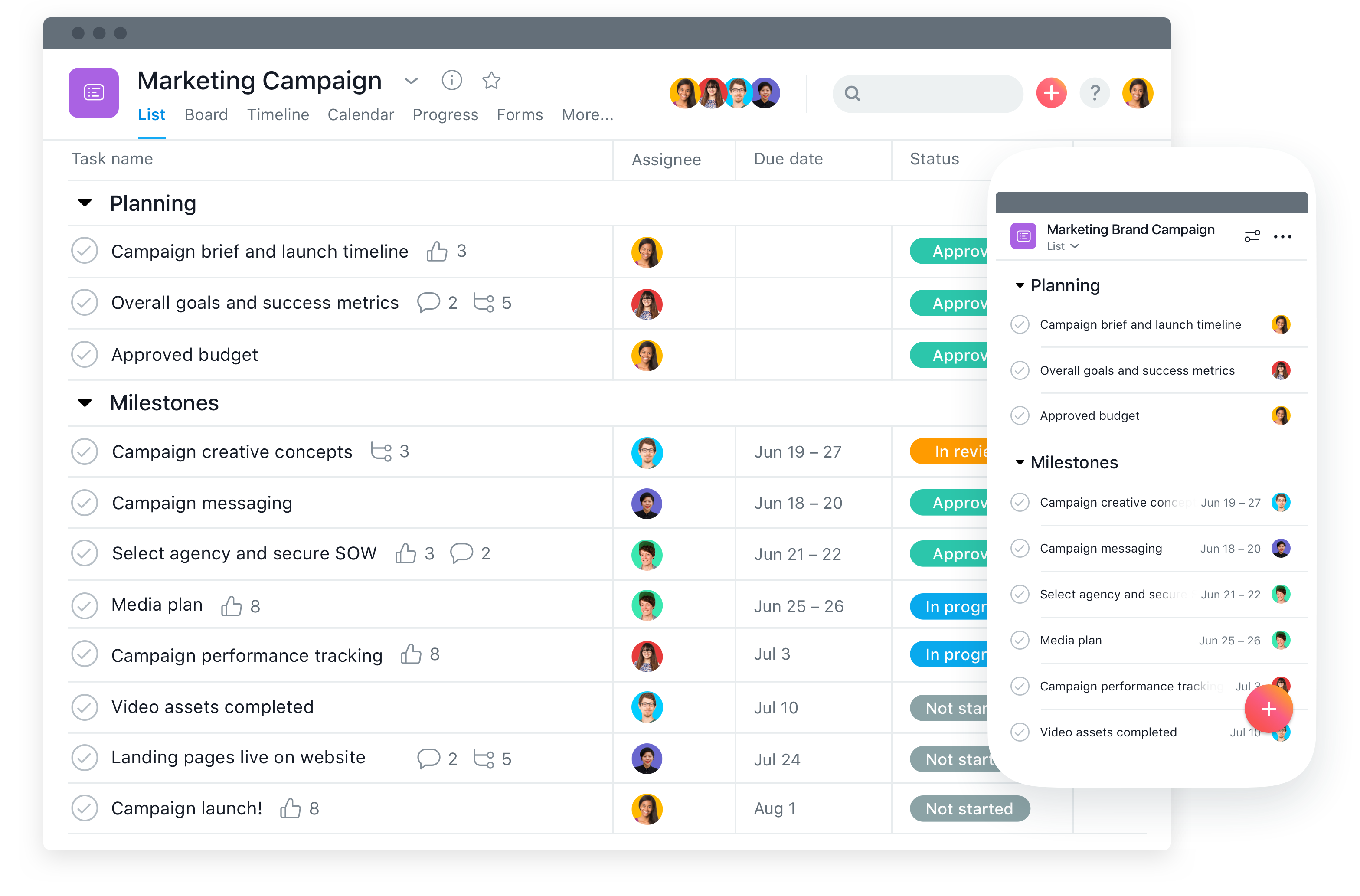
Perhaps one of the most important tips for managing your virtual PR placements! If your emails are piling up with assignments, write them down. Either generate a digital schedule (Asana is a great online organisation tool) or jot it down with pen and paper and stick it in a visible place. If you’re particularly organised, you could even come up with a detailed to-do list that’s broken down into categories based on importance. Regardless, this list will be your best friend as well as your arch-nemesis. After a long day, looking at all the tasks I have completed gives me a little boost whilst also allowing me to schedule the things I didn’t manage to get through today for tomorrow, so they don’t get lost in the next morning’s influx of emails.

asana

This is the Asana project management tool (credit: Asana)

Collaborate with your team

Sharing ideas with each other will improve your projects and you can make new friends in the process. Most companies will set you up with a way of contacting the team, whether it’s via teams, zoom or even WhatsApp so there’s no excuse! At Source, we use Google Hangouts as well as email and of course, picking up the phone, to communicate – but different channels will work for different teams and people.

Communication is key

Remember that. Do not be afraid to ask questions. You are there to learn (and work) and they are there to help. By asking questions you not only gain extra knowledge, but you also gain the skills and information needed to complete the task. Just because you can’t ask questions face to face, doesn’t mean you should put them off. The experience gained from PR work experience is often invaluable when it comes to finding work as a postgraduate, so don’t be afraid to ask anything and everything.

Behave as you would in the office

Last but not least, don’t treat your virtual PR placements any differently than an in-person placement. You should always be timely and productive. Maintain that professional mentality.

Hopefully these tips help someone, and whilst working from home during this time may not be what you planned, you can still make the most of it. Get that experience and put it towards your future. You won’t regret it.

Managing And Leveraging Online Review Platforms For Your Business

Review platforms can divide opinions – some see them as positive, a tool that allows a business to receive feedback from customers to improve performance or to be recognised for their good work, while others view them as potentially damaging and often unfairly given by disgruntled customers or competitors.


Whatever your opinion, it’s important to know how to handle them to protect your reputation or to maximise the positive benefits.  Here we outline some top tips and best practice for handling reviews.


Keeping on top of reviews


To keep on top of review submissions, it’s a good idea to check the various sites that your business is listed on every few days.  Replying to 5-star reviews is just as important as replying to 1-star reviews – let your customers know that you appreciate their feedback and use the channel to build relationships.


Updating your business information


On review platforms such as Google and Tripadvisor, you can also add extra information about your business and keep information accurate and up to date, such as opening times, news and imagery.  As restrictions slowly lift, it may be worthwhile sharing your policies and procedures in helping to make potential customers feel secure when visiting your businesses.  You can also display Covid measures on your Google/Trip Advisor listing.


Maintaining quality in replies


Replies should always be kept consistent, in line with your brand and use the same tone across all review sites.  Where relevant, you may also want to sign off a response with the business owner’s name to make it more personal.


Dealing With Negative Reviews


There are many different approaches that can be taken when responding to negative reviews, largely depending on your brand and how you would like to be perceived.  Rather than publicly call out a reviewer you don’t believe it’s fair, we’d advise to take it away from the site and offer to discuss further via email or on the phone.  Washing your dirty linen in public is rarely good for a business and can even cause greater reputational damage with an online argument.  Take it offline and if possible, engage in a one-on-one conversation with the reviewer before deciding on how best to respond.


Overall, we’d always advise that businesses address negative reviews, so you can be seen to be proactive – even if you don’t agree with the reviewer’s side of the story.  In this digital age we live in, all eyes are on your business, so it’s important to make a good impression as review sites are often visited by potential new customers.


When dealing with a fabricated review, depending on the platform, you can usually contest it and have it taken down.  In more serious cases, for example if a customer has been asked to leave your establishment and left a bad review to punish the business, we’ve successfully worked with the platforms in removing defamatory and unfair reviews.


Using Reviews As Part Of Your Social Media Strategy


Sharing positive reviews on your social media channels is a great way to showcase what your business has to offer, whether it’s to current followers or new customers who have just discovered you.


If you’re a restaurant/pub/bar, sharing positive Instagram story content from customers is a perfect way to illustrate what other customers think of their experiences and also provides fresh new imagery for your social channels.  This type of content is just as important as a review on Tripadvisor or Google, so it’s definitely worth keeping an eye on your social media activity and opportunities.


To find out more about Source PR and how we can support your brand or business with its online presence, drop us a line!

Which Degree Is Best For A Career In PR?

Written by our PR intern and university student Bridie Buckingham

Most of us understand the pressure of choosing the right degree. It can be stressful figuring out what career path you want to take, and when you add all the possible degree options there are available nowadays – it can become very overwhelming. We all want to pick the right degree for us; one that will give us a head start in our chosen field for sure, but one we know that we will enjoy. However, with multiple routes into the world of PR it can be confusing to know which degree to choose.

PR is a complex industry and there are many aspects to it. So, as you can probably imagine, there are a broad range of degrees for you to choose from that will give you a helping hand when it comes to getting the job you want. I hope that from my experience I can shed some light onto the best options for you if you are thinking about a career in PR and take away some of that stress.

More Arts, Less STEM

You don’t have to have studied PR or marketing, to enter the PR industry. In fact, many people working in PR don’t even have degrees. Having said that, the transition out of education and into the workplace is likely to be easier and less bumpy for those who took subjects focused on communicating. Traditionally, subjects like Politics, History, English, Philosophy and even Foreign Languages tend to produce graduates better suited for PR than those with STEM degrees, for example. Although, given our growing reliance on technology, these degrees still absolutely play an important role in the evolving nature of communications too. If you have a passion for storytelling and communicating, then there’s likely a role in PR for you – no matter your educational background.

Which Degree Is Best For PR?

PR (Public Relations)

With PR degrees, the risk is that – in this fast-evolving industry – the course content can become out-of-date quite quickly. Another risk is that students may enter the workplace only to find that the working reality is VERY different from the theory. This is why I believe that PR work experience or a year in industry is essential for any PR degree. If you’re looking to go down this route, do make sure you look at courses with a placement year. Equally, try and line up lots of work experience either in-agency or in-house whilst studying; most universities will encourage and even assist you with getting relevant experience. If you’d like to learn more about how to gain PR work experience, you can read my blog on this by clicking here.

Arts & Business

Courses like Creative Writing or Art can help students develop their creative and compelling storytelling skills; something that is highly valued in PR. A creative brain produces innovative ideas and can become a highly valuable asset to a team when brainstorming strategies and avoiding repetition. Additionally, anyone who studies a business degree will understand the importance of marketing as a whole. As well as this, they will be masters at forward-thinking and possess great strategic knowledge that provides creatives with the commercial vision they need to improve performance.

Journalism

Journalism courses tend to teach students how to write all styles of articles, edit using multiple programs and curate content for multiple media outlets. They provide a kind of flexibility that other courses struggle to when it comes to specialising. Courses like this also aid in building communicative skills. Experience is also key here, and even PR experience is considered valid for a journalism degree. Many of those who have studied or worked in journalism move over to the PR industry, and their skills are invaluable to our practice.

English Language & Literature

As PR is all about understanding audiences’ behaviour and harnessing creativity, courses like English, Psychology and Journalism may give graduates a head start. English can also be paired with a variety of subjects with many relevant links, so do look into joint-honours degrees. With a BA in English, you will develop excellent written and oral communication skills, making you perfect for PR. Crucially, you’ll also learn to write well. This not only includes proper grammar, sentence structure, and punctuation, it means learning to write in a manner that is engaging and effective. Many courses may focus on writing but none to the extent of an English degree that allows you to hone your skills as a writer and communicator. You’ll also learn to read analytically. Being able to take in information and understand it before reframing this information so it can be understood by others, is a skill that is necessary for a successful career in PR.

At Source PR, our staff hold a mixed bag of degrees, including English Literature, Business & PR and Geography. PR is as about personality, imagination, creation, people skills and application. As long as you have these skills you are sure to succeed, regardless of your choice of university degree. Don’t stress and make sure to explore all your options. Happy hunting!

Tag Archive for: pr